



What's Happening?
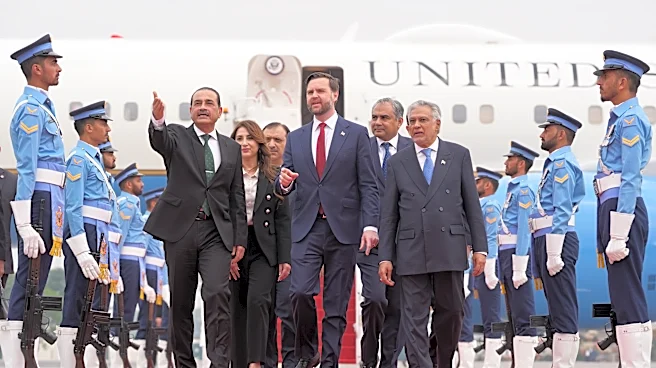
U.S. and Iranian negotiators have engaged in high-level talks in Pakistan, marking the first direct meeting in over a decade. The discussions aim to resolve the six-week war between the two nations, with a focus on the Strait of Hormuz, a vital transit
point for global energy supplies. President Trump has announced that the U.S. military is beginning to clear the strait, which Iran has effectively blocked. The talks are part of a two-week ceasefire agreement, but significant disagreements persist, particularly regarding control of the strait and Iran's nuclear program. The Iranian delegation arrived in mourning for those killed in the conflict, highlighting the human cost of the war.
Why It's Important?
The blockade of the Strait of Hormuz has disrupted global energy markets, leading to increased oil prices and economic uncertainty. The strait is crucial for the transportation of oil and liquefied natural gas, and its closure has significant implications for countries dependent on these resources. The talks are critical for international stakeholders, including energy companies and governments, as they seek stability in the region. The U.S. aims to ensure free passage through the strait and limit Iran's nuclear capabilities, while Iran demands control over the strait and reparations. The outcome of these negotiations will impact global economic conditions and geopolitical dynamics.
What's Next?
Negotiations are expected to continue, although no specific timeline has been provided. The U.S. military's actions to clear the Strait of Hormuz could lead to increased tensions if not managed carefully. Iran's demands for control over the strait and reparations remain unresolved, and the release of frozen assets is a contentious issue. The situation is fluid, with potential for further diplomatic efforts or military actions depending on developments. The international community is closely monitoring the situation, given its implications for global energy markets and regional stability.