



What's Happening?
Iran's Foreign Minister held a call with his Jordanian counterpart to discuss efforts aimed at ending regional escalation and achieving a sustainable ceasefire agreement between the U.S. and Iran. This diplomatic engagement is characterized as standard
mid-cycle diplomacy, where a belligerent party uses a neighboring intermediary rather than directly negotiating with the counterparty. Jordan has historically served as a conduit between Washington and parties with whom direct engagement is difficult. The involvement of Amman suggests that a communication channel is open, though it does not indicate that terms for an agreement are imminent. Such foreign-minister-level calls are often precursors to broader de-escalation, with market patterns showing that risk premiums, particularly in crude and freight, unwind in stages following these types of headlines. However, a durable ceasefire requires confirmation from senior levels in Washington or Tehran, and a softening of rhetoric from both capitals, along with normalization of transit assumptions in shipping and insurance markets.
Why It's Important?
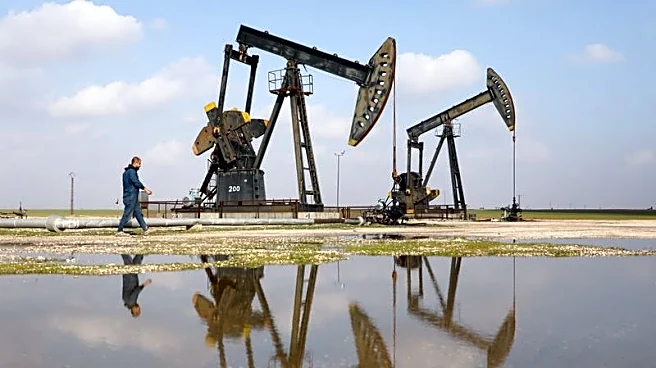
This diplomatic exchange is important because it signals a potential pathway for de-escalation in a volatile region, which has significant implications for global energy markets and international stability. The Middle East is a critical hub for oil production and shipping, and any reduction in tensions could lead to a decrease in the crude and freight risk premiums that have built up during recent conflicts. For the U.S., engaging through intermediaries like Jordan allows for indirect communication with Iran, which is crucial given the current geopolitical landscape and the stated Iranian position of not negotiating directly with the U.S. until certain conditions are met. A sustainable ceasefire agreement between the U.S. and Iran could alleviate concerns about potential military actions and their economic fallout, benefiting global trade and investment. Conversely, if these discussions do not lead to concrete agreements, the elevated headline sensitivity and regional instability will persist, continuing to pose risks to economic stakeholders and international relations.
What's Next?
The immediate next steps involve monitoring whether these discussions translate into tangible actions and official acknowledgments from Washington and Tehran. The market will be looking for signs that the U.S. side acknowledges this communication channel and that rhetoric from both capitals begins to soften. A key indicator of progress will be whether shipping and insurance markets start normalizing transit assumptions, which would reflect a perceived reduction in risk. Without confirmation from senior levels in both the U.S. and Iran, and an agreed framework, the current discussions about ending escalation may not lead to a durable ceasefire. The process is expected to be gradual, with the unwinding of risk premiums occurring in stages, fully materializing only when a confirmed, rather than merely discussed, ceasefire is in place. Continued diplomatic efforts through intermediaries are likely, but their effectiveness will depend on the willingness of all parties to move towards concrete agreements.
Beyond the Headlines
Beyond the immediate diplomatic maneuvers, this situation highlights the complex and often indirect nature of international relations, particularly in regions marked by deep-seated geopolitical rivalries. The reliance on intermediaries like Jordan underscores the challenges of direct engagement between adversaries and the strategic importance of neutral parties in facilitating dialogue. This approach can help manage expectations and provide a buffer against immediate breakdowns in communication, but it also means that progress can be slow and subject to multiple layers of interpretation. The ongoing tensions and the need for de-escalation efforts also point to the broader ethical and humanitarian implications of prolonged conflict, as regional instability often leads to civilian suffering and economic disruption. The long-term shift towards regional security, as discussed by Iranian President Pezeshkian and Russian President Putin, emphasizes the desire among some regional actors to reduce foreign intervention and foster self-reliance in security matters, which could reshape alliances and power dynamics in the future.