







What's Happening?
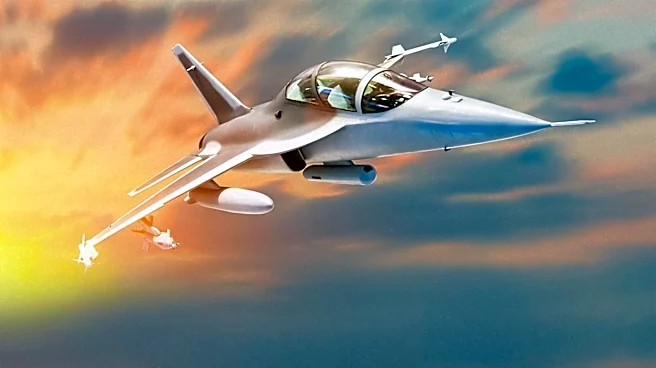
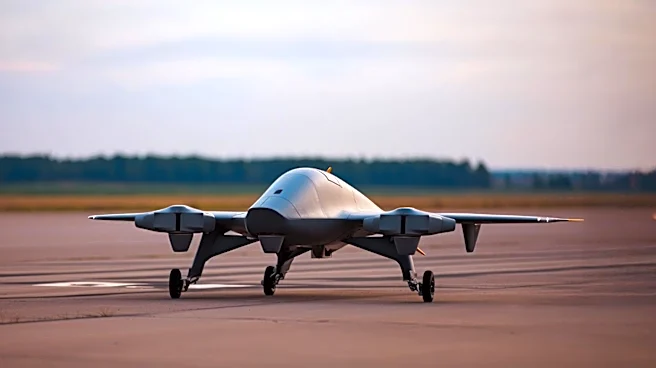
AEVEX has introduced Specter, a new jet-powered autonomous aircraft designed with an emphasis on speed, modularity, and adaptability. Developed in collaboration with advanced manufacturing company Divergent, Specter's architecture is engineered to accommodate
evolving mission requirements without necessitating a complete redesign. The aircraft will feature a turbojet propulsion system and is planned for both ground-launched and air-launched configurations. A key design element is a swappable nose section at the front, capable of housing various payload categories, including electronic warfare, intelligence, surveillance, and reconnaissance (ISR) systems, as well as other mission-specific equipment. The design incorporates operational lessons from AEVEX's experience in deploying thousands of autonomous systems, shaping Specter's software-driven architecture and integrating its CompassX autonomy technology for evolving capabilities.
Why It's Important?
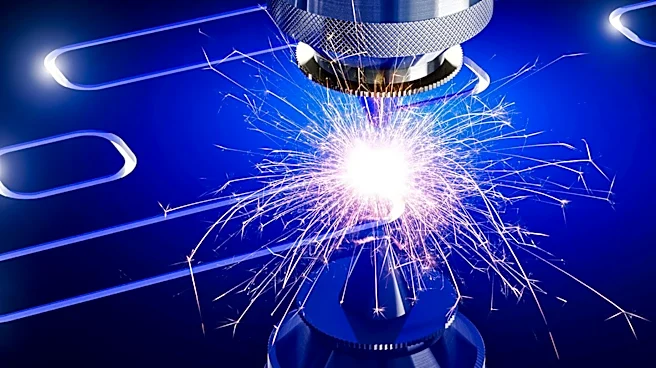
The Specter aircraft represents a significant advancement in autonomous systems, particularly for defense and intelligence applications. Its modular design and adaptability address a critical need for platforms that can quickly reconfigure to meet dynamic mission demands, reducing development time and costs associated with specialized aircraft. The integration of advanced manufacturing techniques, specifically Divergent's DAPS digital manufacturing platform, suggests a shift towards more efficient and scalable production of unmanned aerial vehicles. This approach could enhance the U.S.'s capabilities in areas such as electronic warfare and ISR, providing a flexible and responsive asset for various operational scenarios. The emphasis on a software-driven architecture also allows for continuous upgrades and evolution of capabilities, ensuring the platform remains relevant against emerging threats and requirements.
What's Next?
AEVEX plans to continue the development of Specter, focusing on applying Divergent's DAPS digital manufacturing platform to streamline its production. The aircraft's design philosophy, which prioritizes continuous change and adaptability, indicates that AEVEX will likely pursue ongoing enhancements and modifications based on testing and evolving operational needs. Future steps will involve further integration of the CompassX autonomy technology to ensure its capabilities can evolve with changing requirements. The company's experience in delivering autonomous systems suggests that Specter will be geared towards deployment in various operational theaters, potentially leading to its adoption by defense and intelligence agencies seeking versatile and rapidly deployable unmanned platforms.
Beyond the Headlines
The Specter's design philosophy, which views an unmanned aircraft not as a finished product but as a continuously evolving system, reflects a broader paradigm shift in aerospace engineering. This approach moves away from traditional, rigid design cycles towards more agile, software-defined platforms that can be updated and reconfigured throughout their lifespan. This could have profound implications for the defense industry, fostering faster innovation and reducing the lifecycle costs of complex systems. Furthermore, the collaboration with a digital manufacturing company like Divergent highlights the increasing convergence of advanced manufacturing techniques with aerospace, potentially leading to more sustainable and efficient production methods. The emphasis on modularity and adaptability could also influence future commercial drone development, promoting more versatile and multi-purpose unmanned aerial vehicles across various sectors.