



What's Happening?
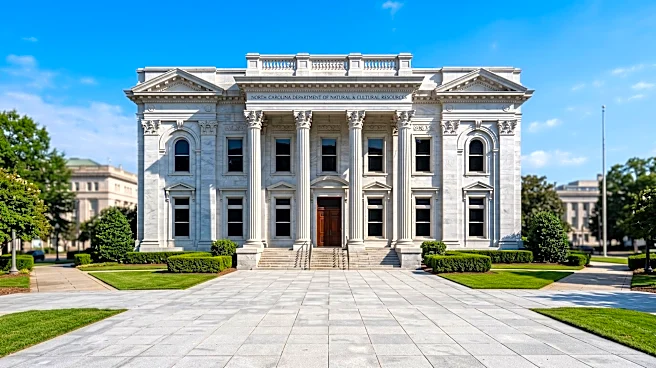
The North Carolina Department of Natural and Cultural Resources (DNCR) has announced the allocation of nearly $4 million in grants from the federal Land and Water Conservation Fund (LWCF). These funds will support nine local parks and recreation projects
across North Carolina. DNCR Secretary Pamela B. Cashwell highlighted that these local parks are crucial for conserving green spaces and providing communities with access to outdoor recreation, complementing the state's broader conservation, education, and recreation efforts. The LWCF program, managed by DNCR through State Parks, provides annual allocations to North Carolina, supporting park projects at state, county, municipal, and tribal levels. Local governments can utilize this funding for land acquisition, developing new recreation facilities, or improving existing parks. For the current cycle, local communities could apply for up to $500,000 per project, requiring a dollar-for-dollar match. The selected projects include initiatives in towns such as Granite Quarry, Hope Mills, Mars Hill, Matthews, Mayodan, Norwood, Rocky Mount, Watauga County, and Wilmington.
Why It's Important?
This allocation of nearly $4 million in federal grants is significant for North Carolina as it directly enhances local communities' access to outdoor recreation and green spaces. The funding supports critical infrastructure development and land conservation, which can lead to improved public health outcomes by encouraging physical activity and providing natural environments for relaxation. Economically, these projects can boost local tourism and create jobs related to park development and maintenance. The required dollar-for-dollar match also encourages local investment, fostering a sense of community ownership and commitment to these recreational assets. By expanding and improving parks, North Carolina is investing in its residents' quality of life, ensuring that diverse populations have opportunities to engage with nature and participate in recreational activities. This initiative also underscores the importance of federal-state partnerships in addressing local needs and promoting environmental stewardship.
What's Next?
For the upcoming fiscal year 2026-2027 funding cycle, eligible communities in North Carolina will have the opportunity to request up to $750,000, with the continued requirement of dollar-for-dollar matching funds. Applications for this next cycle are due by November 2. All proposed projects must demonstrate clear alignment with the goals and priorities outlined in the 2025-2030 N.C. Outdoor Recreation Plan, ensuring that future investments contribute to a cohesive statewide strategy for outdoor recreation. The DNCR will continue to manage the LWCF program, overseeing the implementation of current projects and evaluating new applications. This ongoing process will likely lead to further enhancements of North Carolina's park system and increased recreational opportunities for its residents and visitors.
Beyond the Headlines
The consistent investment in local parks and recreation, facilitated by federal programs like the Land and Water Conservation Fund, reflects a broader societal recognition of the value of green infrastructure. Beyond immediate recreational benefits, these projects contribute to ecological resilience by preserving natural habitats and mitigating the impacts of urbanization. The emphasis on aligning projects with the N.C. Outdoor Recreation Plan suggests a strategic approach to developing a comprehensive and accessible network of outdoor spaces, which can foster a deeper connection between communities and their natural environment. This long-term vision for recreation and conservation can also play a role in attracting new residents and businesses, as access to quality outdoor amenities is increasingly a factor in community desirability. The program's structure, requiring local matching funds, also promotes local engagement and financial commitment, ensuring that these projects are not just federally funded but also locally supported and sustained.