








What's Happening?
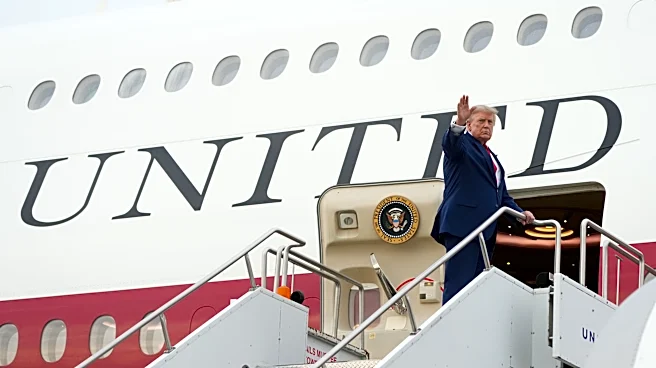
Recent polling data indicates a significant decline in President Donald Trump's approval ratings. According to an Economist/YouGov poll conducted from August 7-10, Trump's approval rating stands at 33 percent, with 62 percent disapproving. This follows
a trend of decreasing support, with disapproval ratings reaching as high as 65 percent in other recent polls. The poll also revealed that 61 percent of respondents believe Trump is using his office for personal gain, and 55 percent think he is misusing the Department of Justice against political enemies. Additionally, 57 percent oppose his controversial East Wing ballroom in the White House. These low approval ratings and widespread disapproval could potentially benefit Democrats in the upcoming midterm elections.
Why It's Important?
The decline in President Trump's approval ratings is significant as it may impact the political landscape ahead of the midterm elections. Historically, a president's low approval ratings can lead to losses for their party in congressional elections. The disapproval of Trump's handling of his office and the perception of misuse of power could energize Democratic voters and sway undecided voters towards the Democratic Party. This shift could alter the balance of power in Congress, affecting legislative priorities and the administration's ability to implement its agenda.
What's Next?
As the midterm elections approach, both parties will likely intensify their efforts to sway voters. Democrats may capitalize on Trump's declining approval ratings to gain seats in Congress, while Republicans might focus on rallying their base and addressing the concerns highlighted in the polls. The outcome of the midterms will be crucial in determining the legislative direction of the country and the administration's ability to govern effectively.