







What's Happening?
On October 22, 1925, a significant technological advancement in U.S. rail transportation occurred when the Central Railroad of New Jersey (CNJ) began operating its diesel-electric locomotive No. 1000. This 300-horsepower boxcab, also known as an oil-electric
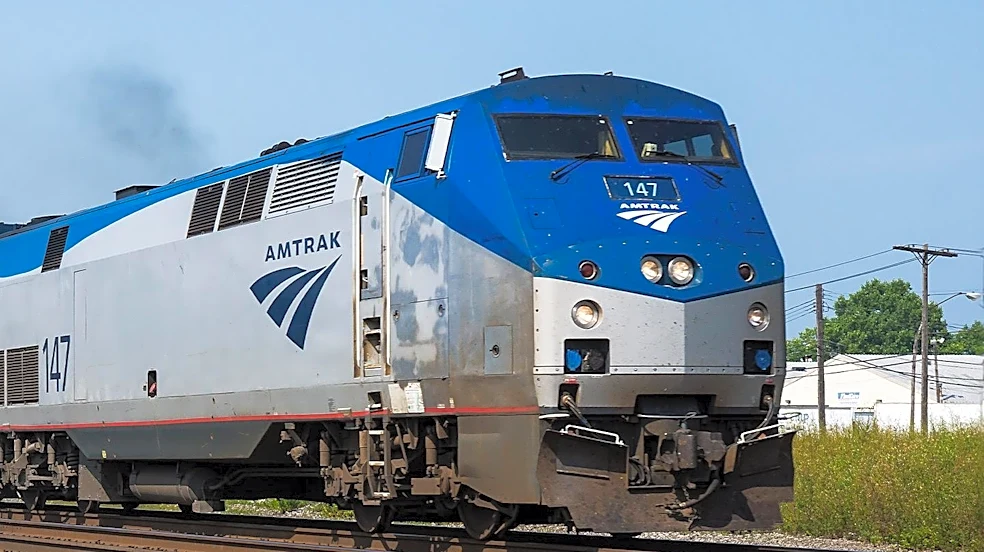
locomotive, was deployed to switch freight cars at the Bronx Terminal in New York City. Its introduction was a direct response to a newly imposed ban on steam trains in urban rail yards, enacted to combat air pollution. CNJ 1000 marked the first commercially successful diesel-electric locomotive on an American railroad, initiating a new chapter for this type of rail vehicle. The locomotive was a collaborative effort between Ingersoll-Rand, General Electric, and the American Locomotive Company. Contemporary reports, such as one from the Connecticut-based Journal, highlighted the revolutionary nature of the new engine, noting its operational cost was about one-fifth that of an ordinary steam locomotive and its capability for high speed without sacrificing load capacity.
Why It's Important?
The deployment of CNJ 1000 was a pivotal moment in U.S. industrial and environmental history. It signaled the beginning of the end for steam locomotives, which had dominated rail transport for decades but were increasingly seen as contributors to urban air pollution. The diesel-electric locomotive offered a cleaner, more efficient, and cost-effective alternative, fundamentally transforming railway operations. The significant reduction in operating costs, as reported by George Doubleday, president of Ingersoll-Rand, made a compelling economic case for the transition. This shift not only improved air quality in densely populated areas but also enhanced the operational efficiency of rail yards, which are critical nodes in the nation's supply chain. The success of CNJ 1000 paved the way for widespread adoption of diesel-electric technology across American railroads, leading to a more modern, reliable, and environmentally conscious freight and passenger rail system. Its impact continues to be felt today, as diesel-electric locomotives remain the backbone of U.S. rail transport.
What's Next?
While the immediate 'next' for CNJ 1000 was its continued service for over three decades until its retirement in 1957 and subsequent donation to the B&O Railroad Museum, its historical significance continues to resonate. The technological precedent set by CNJ 1000 led to the eventual phasing out of steam locomotives across the U.S. rail network. The principles of diesel-electric propulsion continue to be refined, with ongoing advancements in fuel efficiency, emissions reduction, and automation in modern locomotives. The legacy of this innovation also informs current discussions around sustainable transportation and the development of even cleaner alternatives, such as battery-electric or hydrogen-powered trains. The B&O Railroad Museum's preservation of CNJ 1000 ensures that future generations can witness this foundational piece of American transportation history and understand its profound impact on the nation's infrastructure and environment.
Beyond the Headlines
The story of CNJ 1000 extends beyond its mechanical innovation; it represents a broader societal response to industrialization's environmental consequences. The ban on steam trains in urban areas due to air pollution highlights an early recognition of the need for cleaner technologies, predating modern environmental movements. This historical context underscores the long-standing tension between industrial progress and environmental impact, a theme that remains highly relevant today. The collaboration between multiple companies—Ingersoll-Rand, General Electric, and the American Locomotive Company—to develop CNJ 1000 also illustrates the power of inter-corporate partnerships in driving significant technological change. This model of collaborative innovation continues to be a cornerstone of progress in complex engineering fields. Ultimately, CNJ 1000 is a symbol of how technological ingenuity, driven by both economic and environmental pressures, can fundamentally reshape an entire industry and contribute to a more sustainable future.