





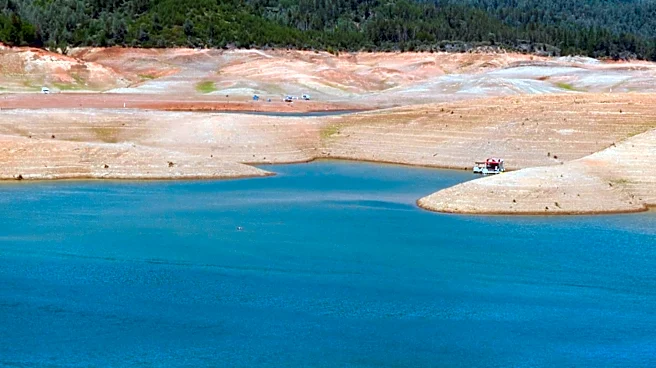
What's Happening?
The federal government has released a new two-year management plan for the Colorado River, mandating significant water cuts for the downstream states of Arizona, California, and Nevada. This plan, covering 2027 and 2028, requires a total reduction of 1.25
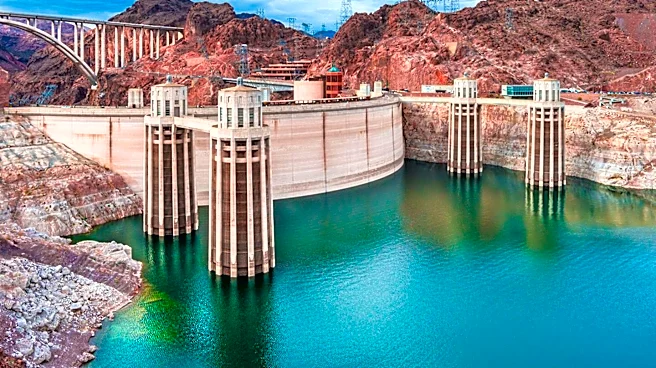
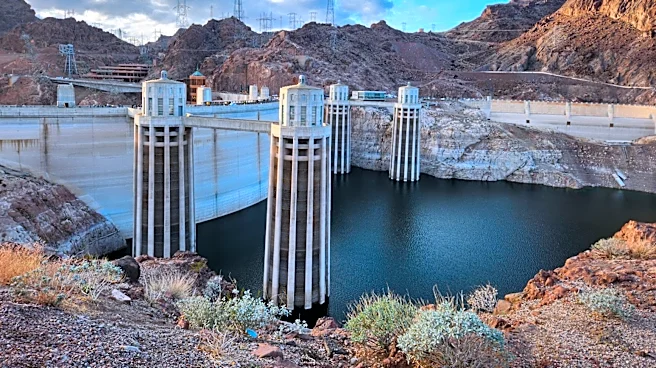
million acre-feet of water from Hoover Dam releases annually. Arizona will cut 760,000 acre-feet, California 440,000 acre-feet, and Nevada 50,000 acre-feet. These mandatory cuts are in addition to voluntary conservation targets totaling 700,000 acre-feet over the two-year period. The decision comes after the seven basin states failed to reach a consensus on water management, prompting federal intervention. Upstream states, including Colorado, are encouraged to conserve but are not subject to mandatory cuts under this plan.
Why It's Important?
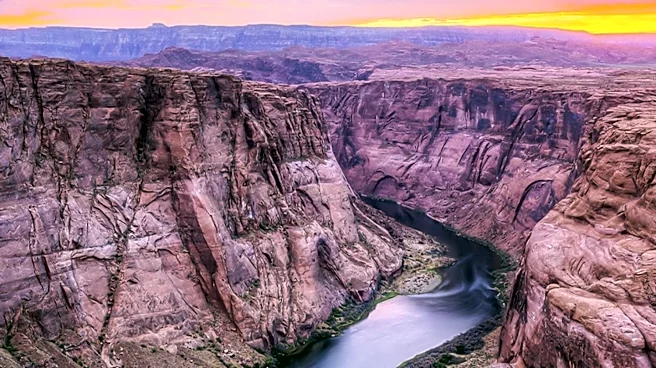
This federal intervention marks a critical shift in the management of the Colorado River, which supplies water to nearly 40 million people and underpins the economies of the Western U.S. The mandatory cuts highlight the severe impact of prolonged drought and rising temperatures on the river system. For the affected downstream states, these reductions will necessitate significant adjustments in water usage for agriculture, industry, and urban populations. The plan also underscores the federal government's increasing role in resolving interstate water disputes when states cannot agree. The protection of Lake Powell and Glen Canyon Dam's hydropower capabilities is a key objective, as a drop below 3,490 feet would halt power generation, impacting energy supply across the West.
What's Next?
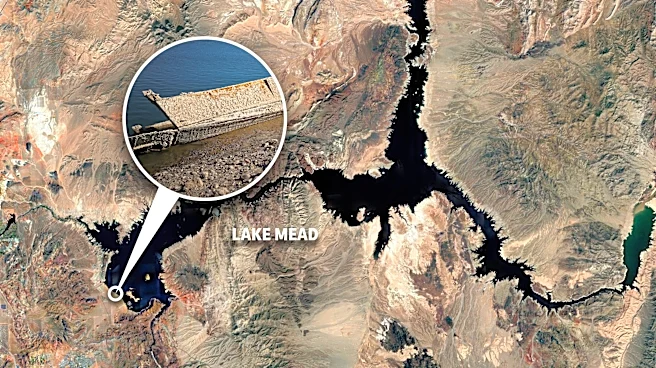
The federal government's plan for 2027-2028 is a short-term solution, with a broader 10-year framework expected to be developed. States and tribal nations will continue to provide input on reservoir management with new operational plans every two years. While the current plan places the burden of mandatory cuts on downstream states, negotiations among all seven basin states are ongoing, and the federal government has indicated it will incorporate any future consensus agreement into its management plan. The effectiveness of voluntary conservation efforts in upstream states will also be closely monitored, as the overall goal is to prevent critically low water levels in key reservoirs like Lake Powell and Lake Mead.
Beyond the Headlines
The federal government's imposition of water cuts reflects the long-standing challenge of over-allocation of the Colorado River, a problem exacerbated by climate change. This situation exposes the limitations of existing compacts and agreements, which were established under different hydrological conditions. The disparity in mandatory cuts between upstream and downstream states could intensify political tensions and legal challenges over water rights. Furthermore, the reliance on federal intervention highlights a potential shift towards more centralized control over critical natural resources in the face of climate-induced scarcity, raising questions about state sovereignty and local control in water management. The long-term implications could include accelerated development of alternative water sources and more stringent conservation measures across the entire basin.