

What's Happening?
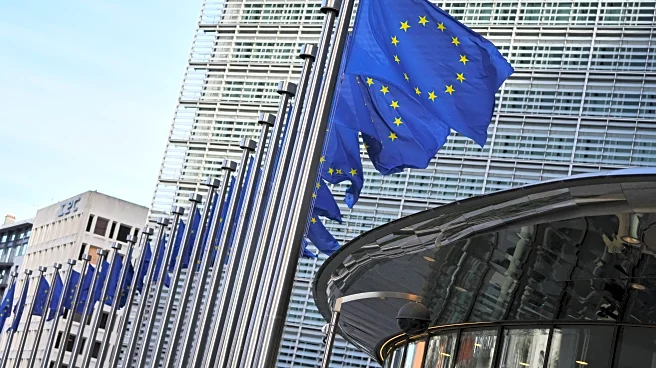
European Union leaders are meeting to discuss the possibility of using frozen Russian assets to provide financial support to Ukraine. This summit is seen as a critical test of the EU's strength, especially after President Trump labeled them as weak. The
EU views Russia's ongoing war as a threat to its security and aims to keep Ukraine financially supported in the absence of a peace deal. The European Commission has proposed using Russian central bank assets held in Belgium to secure a substantial loan for Ukraine. However, concerns about legal and financial risks have been raised by Belgium and other countries like Italy. The urgency of the situation is underscored by Ukrainian President Volodymyr Zelenskyy's participation in the summit, emphasizing the need for a solution.
Why It's Important?
The decision to use frozen Russian assets for Ukraine's financial support is significant as it reflects the EU's commitment to countering Russian aggression and maintaining regional security. This move could bolster Ukraine's war efforts, potentially altering the dynamics of the conflict. The EU's ability to reach a consensus on this issue will demonstrate its unity and resolve in the face of external criticism, particularly from President Trump. The financial aid could also stabilize Ukraine's economy, providing a lifeline to its citizens and military. The outcome of this summit may influence future EU foreign policy decisions and its relationship with Russia.
What's Next?
If the EU leaders agree on using frozen Russian assets, the next steps will involve addressing the legal and financial concerns raised by member states. The implementation of this decision will require careful coordination to ensure compliance with international laws and regulations. Additionally, the EU will need to monitor the impact of this financial support on Ukraine's war efforts and adjust its strategy accordingly. The decision may prompt reactions from Russia, potentially affecting diplomatic relations and leading to further geopolitical tensions.