

What's Happening?
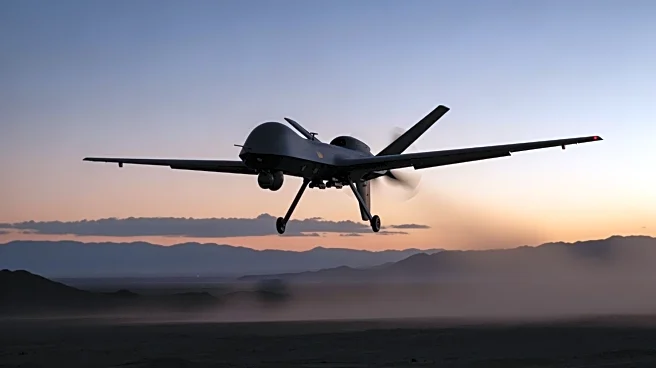
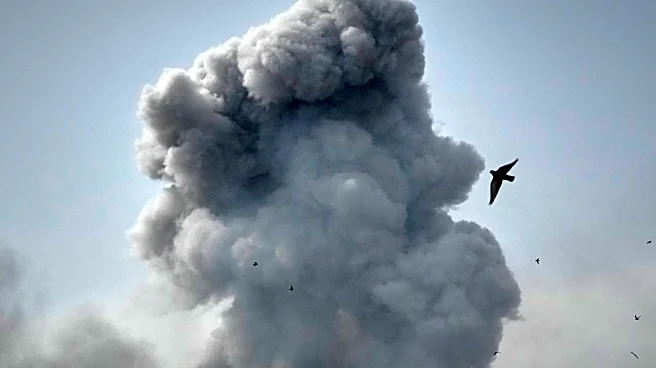
The United States has launched a series of strikes on Iranian targets using LUCAS drones, a low-cost attack drone modeled after Iran's Shahed-136. This marks the first combat use of these drones by the U.S. Central Command's Task Force Scorpion Strike
during Operation Epic Fury. The strikes prompted a retaliatory response from Iran, which used Shahed drones to target the U.S. Fifth Fleet headquarters in Bahrain. The attacks caused minimal damage and no casualties. The LUCAS drones, initially developed for training purposes, have been adapted for various missions, including reconnaissance and intelligence collection. The U.S. also utilized Tomahawk cruise missiles in the operation, although the exact number remains undisclosed.
Why It's Important?
The deployment of LUCAS drones signifies a shift in U.S. military strategy, emphasizing the use of cost-effective, modular drones in combat operations. This development highlights the ongoing technological arms race between the U.S. and Iran, with both nations leveraging drone technology for strategic advantage. The use of drones in military operations could reshape future conflicts, reducing reliance on traditional, more expensive weaponry. The situation also underscores the geopolitical tensions in the Middle East, with potential implications for U.S. relations with its allies and adversaries in the region.
What's Next?
The U.S. may seek support from European allies to bolster its drone capabilities and counter Iran's drone production. The effectiveness of the LUCAS drones in combat will likely influence future military procurement and strategy. Additionally, the U.S. must address its limited stockpile of Tomahawk missiles, which are crucial for both offensive and defensive operations. The ongoing conflict could lead to further escalation, with potential impacts on global oil markets and regional stability.