



What's Happening?
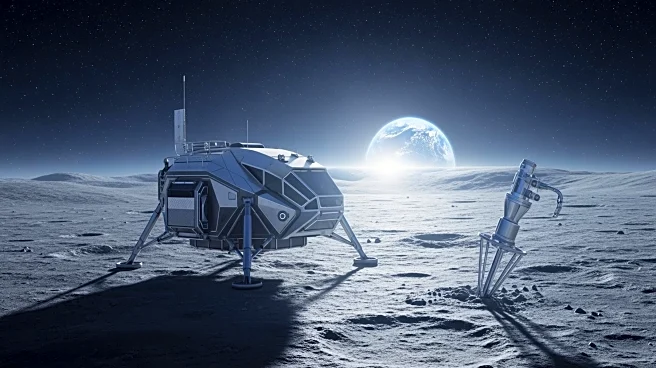
Seattle-based startup Interlune, in collaboration with Vermeer, is advancing plans to mine the Moon by 2029. The company has developed a prototype electric excavator capable of processing lunar soil, targeting helium-3 extraction, a potential energy source
for nuclear fusion. This initiative is part of a broader race involving private companies and national space agencies to exploit lunar resources. However, the legal framework governing space exploration remains outdated, with treaties like the 1967 Outer Space Treaty lacking enforcement mechanisms. The U.S., Luxembourg, Japan, and the UAE have passed laws allowing resource extraction, but international consensus is lacking.
Why It's Important?
The push to mine the Moon represents a significant shift in space exploration, with potential economic and scientific benefits. Helium-3 extraction could revolutionize energy production, offering a clean and abundant power source. However, the absence of a clear legal framework poses risks of conflict and environmental impact. As more entities join the race, the potential for disputes over resource claims and operational interference increases. This situation underscores the need for updated international agreements to ensure sustainable and peaceful space exploration.
Beyond the Headlines
The race to mine the Moon raises ethical and environmental concerns. Large-scale mining operations could disrupt lunar science and alter the Moon's environment. The lack of a shared legal framework also highlights the challenges of governing space activities in a rapidly evolving technological landscape. As countries and companies pursue lunar resources, the need for international cooperation and regulation becomes increasingly urgent.