



What's Happening?
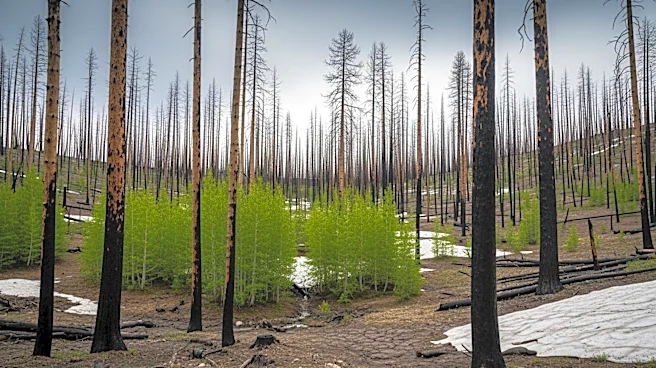
A study conducted by Western Colorado University has found that wildfires are more likely to be high severity during years with low snowpack. Lead author Jared Balik explains that low snowpack winters result in less water retention, preconditioning forests
for more destructive fires. These high severity fires not only kill living trees but also consume the seed sources necessary for forest regeneration, potentially transforming forests into grasslands or shrublands. The study's release coincides with Colorado experiencing its lowest snowpack year on record, setting the stage for a potentially severe wildfire season. Multiple fires have already occurred, including a significant one near Colorado Springs.
Why It's Important?
The findings of this study highlight the critical role of snowpack in forest fire dynamics and underscore the broader implications of climate change on wildfire severity. As snowpack levels decline, the risk of high severity fires increases, posing threats to ecosystems, carbon storage, and air quality. This research emphasizes the need for proactive forest management strategies, such as prescribed burns during high snowpack years, to mitigate the impact of future wildfires. The study also draws attention to the human role in fire prevention, as most wildfires are started by human activities.
What's Next?
The study suggests that forest managers should capitalize on high snowpack years to conduct prescribed burns, which are less likely to escalate into high severity fires. Additionally, public awareness and responsible behavior in fire-prone areas are crucial to preventing human-caused ignitions. As climate change continues to affect snowpack levels, policymakers and environmental agencies may need to develop adaptive strategies to manage and reduce wildfire risks effectively. The ongoing monitoring of snowpack and fire conditions will be essential in predicting and preparing for future fire seasons.