





What's Happening?
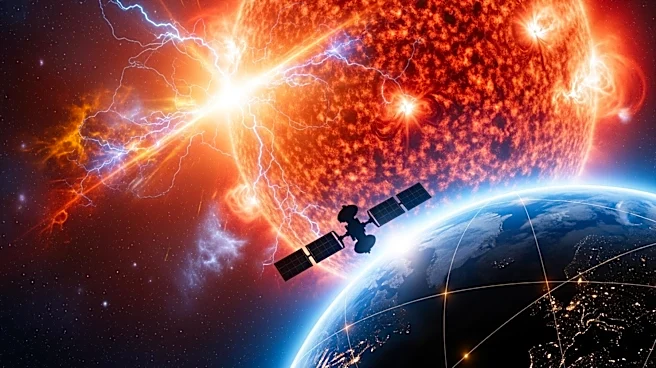
A recent report from the U.K.'s Science and Technology Facilities Council (STFC) highlights the potential impacts of a worst-case solar storm scenario on Earth. The report outlines how space weather, including solar flares, geomagnetic storms, and solar radiation
storms, can disrupt various technologies. Solar flares can cause radio blackouts by increasing ionization in the upper atmosphere, while geomagnetic storms, resulting from plasma eruptions, can affect Earth's magnetic field and power grids. Solar radiation storms, involving high-energy particles from the sun, pose risks to satellites and other space-based systems. The report emphasizes the vulnerability of satellites, which are crucial for GPS and weather forecasting, to radiation and atmospheric changes. It also notes the potential for power grid disruptions due to additional electric currents generated during geomagnetic storms.
Why It's Important?
The implications of a severe solar storm are significant for modern infrastructure, particularly in technology-dependent societies like the U.S. Satellites, which are essential for navigation, communication, and weather forecasting, could suffer damage or failure, impacting industries reliant on these systems. Power grids could experience outages due to increased electric currents, affecting regional electricity supply and potentially causing long-term damage to transformers. The agricultural industry, which relies heavily on satellite navigation, could face substantial losses, as seen during a previous geomagnetic storm. The report underscores the need for improved monitoring and forecasting of space weather to mitigate these risks and protect critical infrastructure.
What's Next?
As the ability to monitor and forecast solar storms improves, stakeholders in technology and infrastructure sectors may need to develop contingency plans to address potential disruptions. Governments and industries could invest in strengthening satellite systems and power grids to withstand space weather events. Additionally, international collaboration on space weather research and preparedness could enhance global resilience. The report suggests that while extreme space weather is unlikely to cause a doomsday scenario, proactive measures are essential to minimize its impact on modern infrastructure.
Beyond the Headlines
The report raises ethical and policy considerations regarding the protection of aircrew from radiation exposure during solar storms. It suggests limiting flight duties for aircrew, particularly pregnant crew, to reduce radiation risks. This highlights the need for policies that prioritize health and safety in aviation during space weather events. Furthermore, the report's focus on space weather's impact on technology underscores the interconnectedness of global systems and the importance of international cooperation in addressing these challenges.