




What's Happening?
Ethiopia is on track to significantly increase its export revenue from $3 billion to $10 billion, driven by industrial expansion and a strategic focus on import substitution. The country's Prime Minister highlighted the success of the 'Made in Ethiopia'
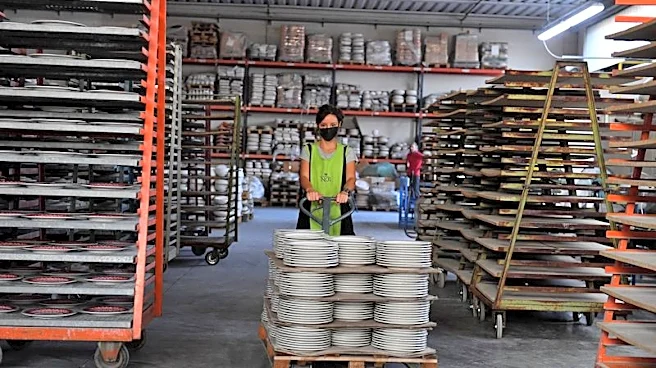
movement and the prioritization of domestic manufacturing capabilities. Over the past four years, Ethiopia has attracted over 2,800 domestic and foreign investments, boosting production capacity utilization from 47% to 67%. The government has also designated 96 products for domestic production, including a focus on the ceramics industry, as part of its comprehensive import substitution strategy.
Why It's Important?
This development marks a significant milestone in Ethiopia's economic growth, showcasing the effectiveness of its industrial policies and governance. The increase in export revenue is expected to strengthen the country's economic position and reduce dependency on foreign imports. By enhancing domestic manufacturing capabilities, Ethiopia aims to create jobs, increase foreign exchange reserves, and foster sustainable economic development. The success of the 'Made in Ethiopia' movement could serve as a model for other developing countries seeking to boost their economies through industrialization and import substitution.