




What's Happening?
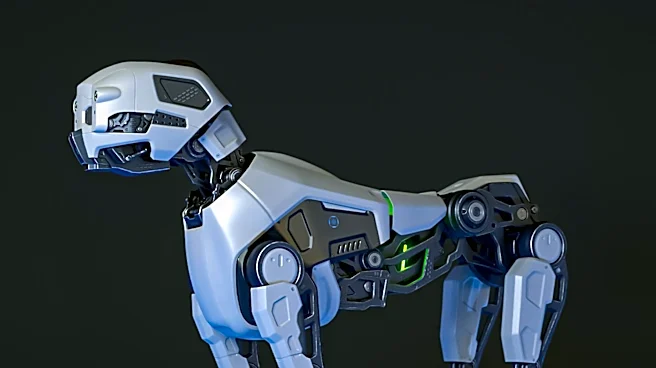
AI-RAN (Artificial Intelligence Radio Access Networks) is transitioning from field trials to government-backed programs, with significant developments in South Korea and other regions. The South Korean government has launched a Hyper-AI Network pilot,
integrating AI-RAN with industrial robots for enhanced communication capabilities. This move signifies a rapid shift from research to commercial deployment. Meanwhile, telecom operators are increasingly building and monetizing their own AI models, moving beyond purchasing AI solutions. This includes AT&T's launch of OTel 2.0, a telecom-focused AI model, and SK Telecom's introduction of the A.X K2 LLM.
Why It's Important?
The expansion of AI-RAN into government-backed programs marks a significant milestone in the integration of AI into telecommunications infrastructure. This development could lead to more efficient and reliable communication networks, particularly in industrial settings. The move by telecom operators to develop proprietary AI models indicates a shift in the industry towards greater control and monetization of AI technologies. However, the widening trust gap in AI accountability poses challenges, as the technology's capabilities outpace the tools available to verify its accuracy and reliability. This could impact the adoption and regulation of AI in critical sectors.
What's Next?
As AI-RAN programs expand, stakeholders will need to address the trust and accountability issues associated with AI technologies. Governments and industry leaders may need to develop new regulatory frameworks to ensure the safe and effective deployment of AI in telecommunications. The success of these programs could influence global standards and practices in AI integration. Additionally, telecom operators will likely continue to innovate and refine their AI models, potentially leading to new services and business models. The industry will need to balance innovation with ethical considerations and public trust.