

What's Happening?
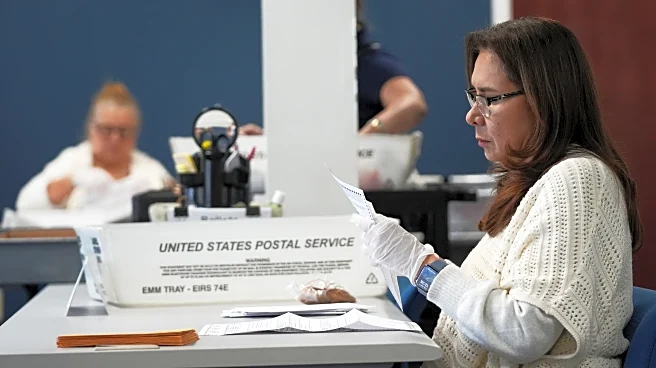
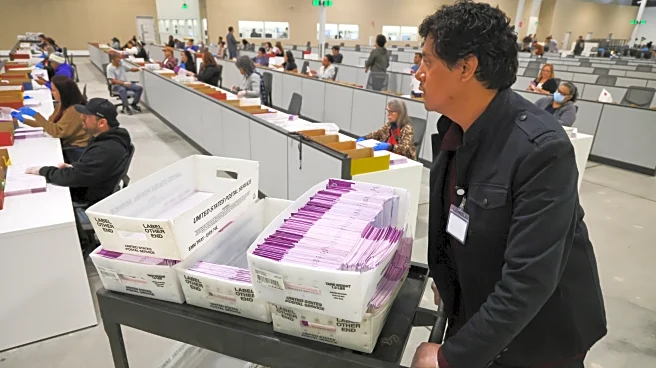
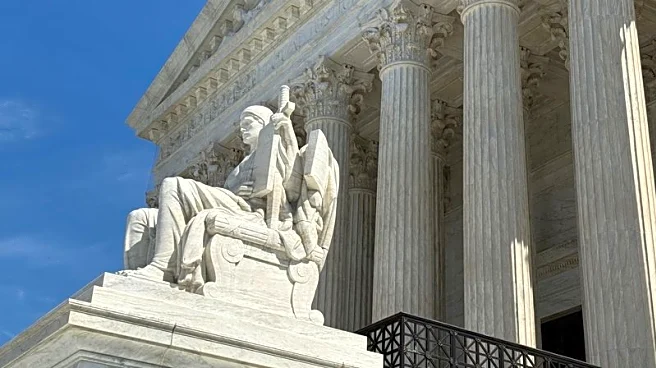
The U.S. Supreme Court is currently deliberating on a case that questions the validity of mail-in ballots arriving after Election Day. This case, which could affect hundreds of thousands of voters, involves a Mississippi law allowing ballots postmarked
by Election Day to be counted if they arrive within five business days. The court's conservative justices expressed skepticism about this grace period, raising concerns about election integrity and voter confidence. Justice Brett Kavanaugh highlighted the risk of perceived election theft if significant vote changes occur after Election Day. The case is part of a broader debate on mail-in voting, with several Republican-led states having recently eliminated similar grace periods. The Republican National Committee argues that federal law mandates ballots be received by Election Day, a stance supported by President Trump's previous executive order, which was largely blocked by federal courts.
Why It's Important?
The outcome of this Supreme Court case could have significant implications for future U.S. elections, particularly regarding mail-in voting. If the court rules against grace periods, it could lead to stricter voting regulations, potentially disenfranchising voters who rely on mail-in ballots, such as those in rural areas or with limited access to polling places. This decision could also influence public trust in the electoral process, as changes in vote totals after Election Day might be perceived as manipulative. The case highlights the ongoing partisan divide over voting rights, with Republicans generally advocating for stricter regulations and Democrats opposing measures they view as voter suppression.
What's Next?
A decision from the Supreme Court is expected later in the spring or early summer. If the court rules against grace periods, states will need to adjust their election procedures, potentially increasing the administrative burden on election officials. This ruling could also prompt further legislative efforts at both state and federal levels to address mail-in voting regulations. The decision may influence upcoming elections, as states and political parties strategize around the new legal framework for mail-in ballots.