






What's Happening?
A pre-Halloween storm in 1776 played a crucial role in the American Revolution by enabling the Continental Army to successfully retreat from New York into New Jersey. After British forces seized control of New York City on September 15, 1776, General
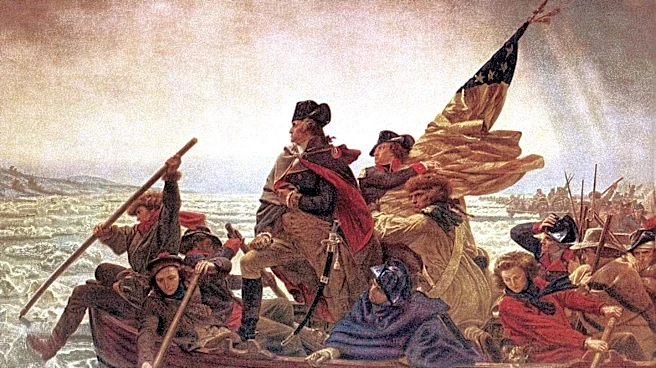
George Washington ordered his troops to move north to White Plains. On October 28, 1776, the Battle of White Plains commenced, with British and Hessian troops engaging the Continental Army. Despite American casualties and being outgunned, a small force led by Colonel John Glover delayed the British advance, allowing the main army to reposition. A severe storm, bringing heavy rain and winds for approximately 20 hours, began on October 30, preventing British General William Howe from launching a planned assault on Halloween. This unexpected weather provided Washington and his army a critical window to retreat to North Castle and eventually to New Jersey, keeping the revolution alive.
Why It's Important?
This historical event underscores the significant impact of unforeseen circumstances, such as weather, on military outcomes and national destiny. Had the storm not occurred, General Howe's planned Halloween attack could have potentially ended the American Revolution just a year into the conflict, with a decisive British victory. The successful retreat allowed the Continental Army to regroup and continue fighting, setting the stage for future pivotal moments like the counterattack across the Delaware River on Christmas Night, which led to the Battle of Trenton. This demonstrates how a seemingly minor environmental factor can alter the course of major historical events, highlighting the fragility and contingency of historical processes and the importance of resilience in the face of adversity for nascent nations.
What's Next?
While this event is historical, its implications continue to resonate in discussions about military strategy and the role of external factors in conflict. Future military planning often incorporates detailed meteorological analysis, recognizing that weather can be a force multiplier or a significant impediment. The story serves as a reminder for contemporary strategists and leaders to consider all variables, including environmental ones, when making critical decisions. It also reinforces the narrative of American perseverance and the unexpected turns that shaped the nation's founding, influencing how historical events are taught and interpreted in educational and cultural contexts.
Beyond the Headlines
The narrative of the 1776 pre-Halloween storm extends beyond a simple military anecdote, touching upon themes of divine providence and the 'miraculous' nature of the American Revolution. For many, such events are seen as evidence of a higher power guiding the nascent nation, contributing to a foundational mythos that emphasizes resilience and destiny. Culturally, it reinforces the idea that even in dire circumstances, unexpected aid can emerge, fostering a sense of hope and determination. Legally and ethically, it raises questions about the 'rules of engagement' in warfare when natural phenomena intervene, though these were less formalized in the 18th century. This event contributes to the broader understanding of how a young nation, against overwhelming odds, managed to secure its independence, shaping its identity and self-perception for centuries to come.