



What's Happening?
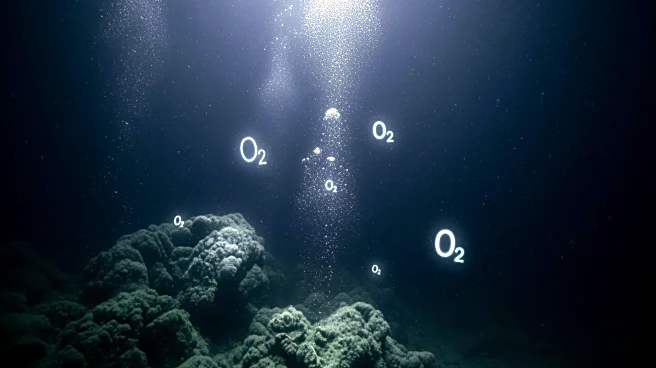
Researchers are investigating the presence of 'dark oxygen' in the Clarion-Clipperton Zone, a key area for deep-sea mining. This unexpected oxygen production by metallic nodules on the seafloor could support life in the deep ocean, including microbes
and sea creatures. The discovery has sparked controversy, as mining companies plan to extract valuable metals like cobalt and nickel from these nodules. Scientists are returning to the site to confirm the existence of dark oxygen and understand its production, which may involve electrolysis facilitated by electric currents generated by the nodules.
Why It's Important?
The potential existence of dark oxygen challenges current understanding of deep-sea ecosystems and could impact the future of deep-sea mining. If confirmed, this phenomenon may necessitate a reevaluation of environmental impacts associated with mining activities, potentially leading to stricter regulations and conservation efforts. The findings could also influence global discussions on sustainable resource extraction and the protection of marine biodiversity, as well as spark interest in further scientific exploration of the deep ocean.