




What's Happening?
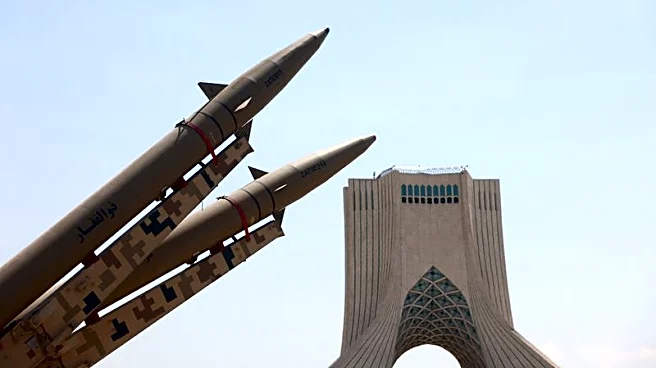
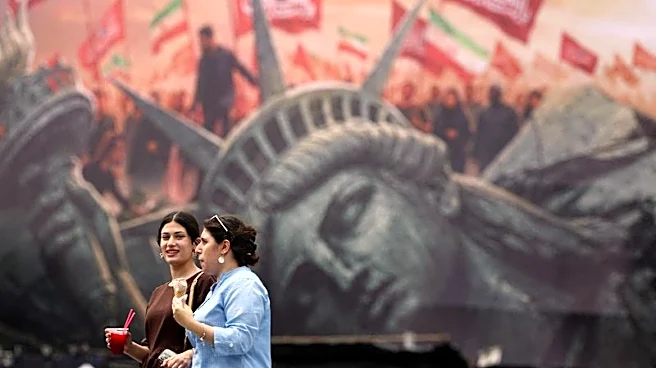
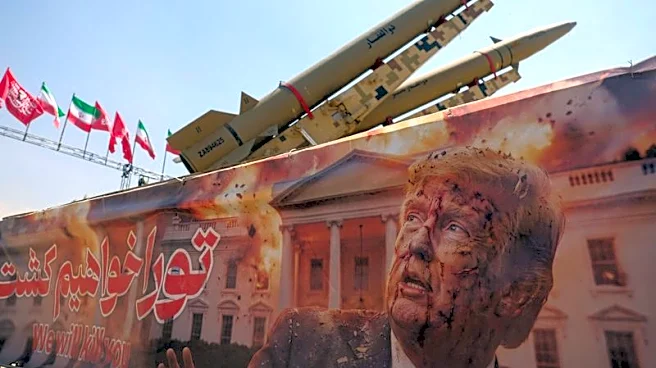
President Trump has issued a stark warning to Iran, stating that the country is facing a 'last chance before decapitation' amid ongoing tensions over the Strait of Hormuz. Despite Tehran's denial of negotiations, Trump insists that talks are ongoing,
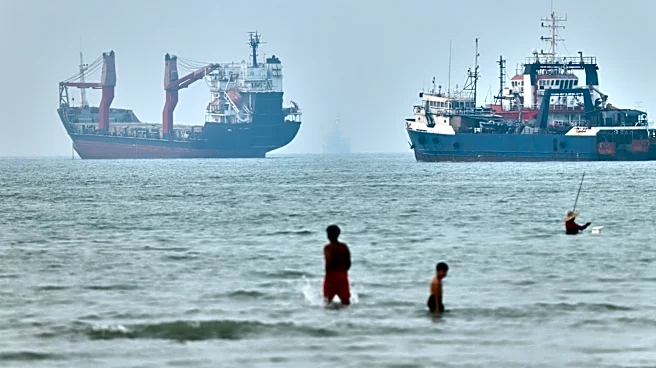
focusing on reopening the critical waterway and the denuclearization of Iran. The Strait of Hormuz, a vital corridor for global oil trade, has been effectively closed by Iran following U.S. and Israeli strikes, leading to significant disruptions in energy markets.
Why It's Important?
The closure of the Strait of Hormuz has significant implications for global energy markets, as it is a key route for oil transportation. The ongoing conflict and diplomatic tensions between the U.S. and Iran could lead to further instability in the region, affecting global oil prices and economic stability. The situation also highlights the delicate balance of power in the Middle East and the potential for escalation if diplomatic efforts fail.
What's Next?
The outcome of the negotiations and the reopening of the Strait of Hormuz will be critical in determining the future of U.S.-Iran relations and regional stability. Potential reactions from major stakeholders, including other Gulf states and global powers, will influence the diplomatic landscape. The international community will be closely monitoring the situation, with possible interventions or sanctions depending on the developments.
Beyond the Headlines
The situation underscores the complexities of international diplomacy and the challenges of negotiating with nations that have conflicting interests. The use of military threats as a diplomatic tool raises ethical questions about the use of force in international relations. The long-term implications could include shifts in alliances and a reevaluation of strategies for dealing with nuclear proliferation and regional conflicts.