
What's Happening?
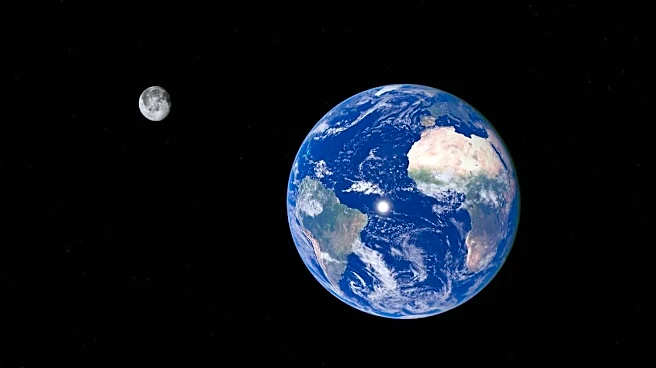
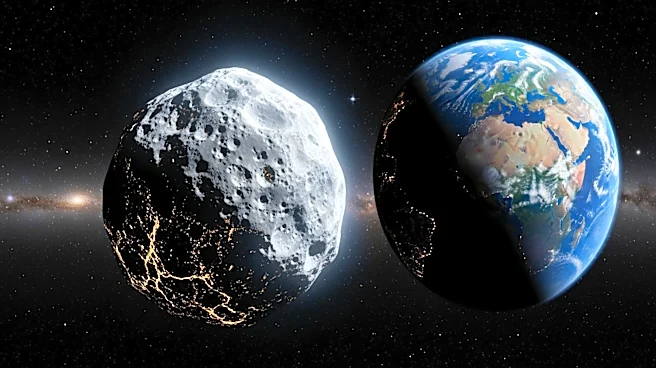
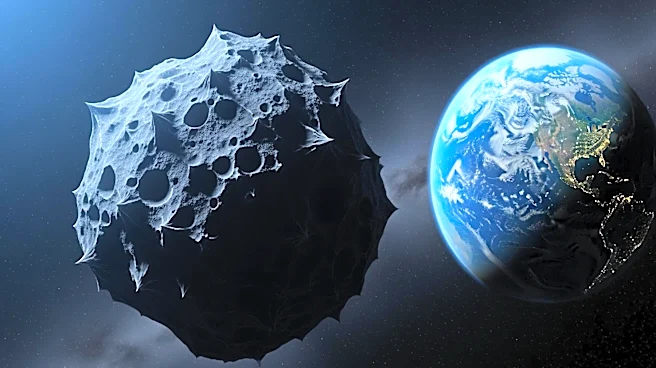
On May 18, 2026, asteroid 2026 JH2, comparable in size to a small building, will pass Earth at a distance closer than the Moon. Discovered just over a week before its closest approach, the asteroid will pass at about
90,000 km (56,000 miles) from Earth. Despite its proximity, astronomers confirm that 2026 JH2 poses no threat of collision. The asteroid's flyby offers a valuable opportunity for real-time observation and study of near-Earth objects. This event highlights the importance of monitoring potentially hazardous asteroids, although 2026 JH2 is not considered a significant risk.
Why It's Important?
The close approach of asteroid 2026 JH2 underscores the need for vigilant monitoring of near-Earth objects. While this particular asteroid poses no threat, its proximity serves as a reminder of the potential risks associated with larger asteroids. The event provides astronomers with a chance to study the asteroid's characteristics and trajectory, contributing to the broader understanding of space objects that could impact Earth. This knowledge is crucial for developing strategies to mitigate potential future threats from asteroids.
What's Next?
Following the flyby of 2026 JH2, astronomers will continue to track and study other near-Earth objects. The data collected from this event will enhance predictive models and improve the accuracy of future asteroid impact assessments. Ongoing advancements in telescope technology and international collaboration will be essential in identifying and monitoring potentially hazardous asteroids. Public interest in asteroid tracking is likely to increase, prompting further investment in space observation programs.