


What's Happening?
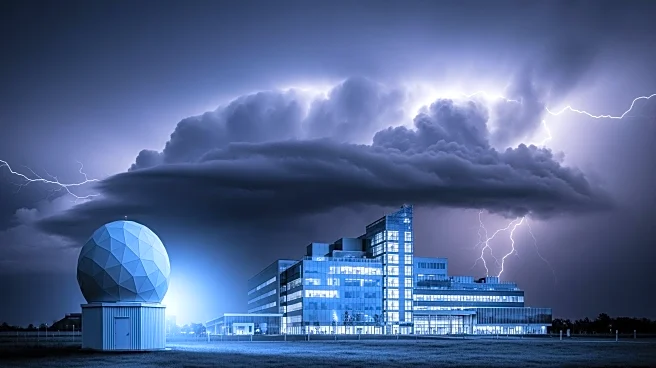
President Trump has been linked to a controversial decision to dismantle the National Center for Atmospheric Research (NCAR) in Boulder, Colorado. This move is reportedly in retaliation against Colorado's refusal to release Tina Peters, a former Mesa
County Clerk and convicted felon, from prison. Colorado officials, including Senator Michael Bennet and House Representative Joe Neguse, have criticized the decision as a retaliatory action. NCAR, a leading climate research facility funded by the National Science Foundation and managed by the University Corporation for Atmospheric Research, employs 830 people and plays a crucial role in global climate research. The White House has not denied the connection between the dismantling of NCAR and the situation involving Tina Peters.
Why It's Important?
The dismantling of NCAR could have significant implications for climate research and policy in the United States. As a key facility for atmospheric and climate science, NCAR provides essential data and models that support scientific understanding and weather prediction. The potential loss of this resource could hinder scientific progress and affect global climate initiatives. Additionally, the situation highlights the tension between federal and state governments, with Colorado officials resisting what they perceive as undue pressure from the Trump administration. This conflict underscores the broader political dynamics at play and raises concerns about the use of federal power to influence state decisions.
What's Next?
Colorado Senators Michael Bennet and John Hickenlooper have placed a hold on a Senate appropriations package to demand full funding for NCAR. They are committed to using all available means to protect the facility and counteract President Trump's actions. The ongoing dispute may lead to further political maneuvering as Colorado officials seek to safeguard their state's interests. The outcome of this conflict could set a precedent for how similar situations are handled in the future, particularly regarding federal-state relations and the protection of scientific institutions.