







What's Happening?
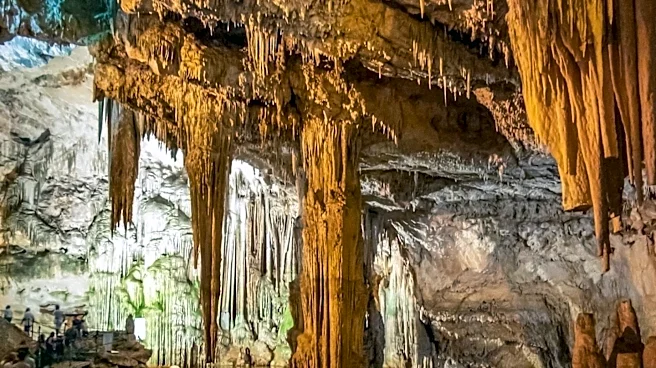
The Lost Sea, located within Craighead Caverns in Tennessee, is recognized as the second largest non-subglacial underground lake in the world. Situated about 140 feet below ground, this natural wonder spans at least 176,000 square feet. The lake is a Registered
National Natural Landmark by the US Department of the Interior. Historically, the Cherokee people were aware of the caverns, but it was not until 1905 that the lake was discovered by European settlers, thanks to a young boy named Ben Sands. The caverns are home to rare anthodites, also known as cave flowers, and cave crayfish, which have adapted to life in darkness. The site also holds fossilized remains of a Pleistocene-era Jaguar, now displayed at the American Museum of Natural History.
Why It's Important?
The Lost Sea is not only a natural marvel but also a significant site for scientific research and tourism. Its unique geological and biological features provide valuable insights into subterranean ecosystems and the adaptation of species to dark environments. The presence of rare anthodites and adapted cave crayfish highlights the ecological diversity and evolutionary processes occurring in isolated environments. Additionally, the lake's status as a National Natural Landmark underscores its importance in preserving natural heritage and promoting environmental education. The site attracts tourists and researchers alike, contributing to local economies and fostering a greater understanding of natural history.
What's Next?
Future research at The Lost Sea may focus on further exploring its geological formations and the unique species that inhabit the caverns. Continued scientific studies could provide deeper insights into the evolutionary adaptations of organisms living in such isolated and dark environments. Additionally, efforts to preserve and protect the site will likely continue, ensuring that it remains a valuable resource for education and tourism. The ongoing interest in the lake may also lead to new discoveries about the region's geological history and the broader implications for understanding subterranean ecosystems.
Beyond the Headlines
The Lost Sea's discovery and subsequent recognition highlight the importance of preserving natural wonders and the role they play in cultural and scientific narratives. The site's history with the Cherokee people and its later discovery by European settlers reflect broader themes of exploration and cultural exchange. The preservation of such sites is crucial for maintaining biodiversity and understanding the complex interactions within ecosystems that are often hidden from view. As climate change and human activities continue to impact natural environments, the study and conservation of places like The Lost Sea become increasingly important.