








What's Happening?
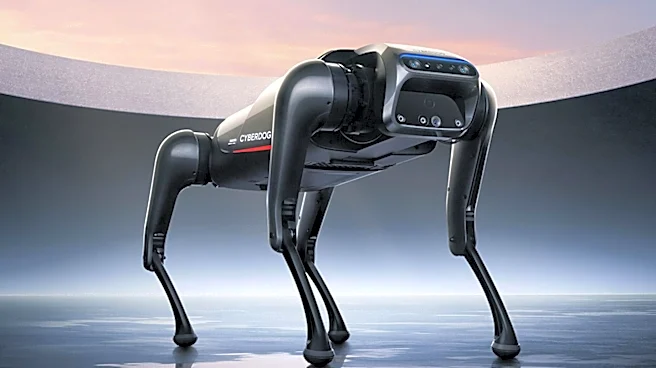
The field of robotics is seeing significant advancements in animal-inspired designs, moving beyond traditional mechanical figures to complex electronic devices infused with artificial intelligence. These robotic animals mimic the appearance and behavior
of real creatures, equipped with sensors, speakers, motors, and processor modules. Examples include cyborg cockroaches used in disaster relief to survey rubble and locate victims, robot ants capable of moving loads 2,000 times their own mass, and snake-like robots for underwater pipeline repair. Other innovations include robotic crabs for underground exploration, robot falcons to deter birds from airfields, and miniature robotic bees for reconnaissance in challenging environments. These devices are designed to solve practical and humanitarian problems, offering capabilities such as navigating obstacles, penetrating hard-to-reach places, and operating without the need for food or water.
Why It's Important?
The development of these advanced robotic animals holds significant implications across various sectors. In disaster response, cyborg cockroaches and similar micro-robots can drastically improve search and rescue operations by quickly surveying collapsed structures and identifying survivors, potentially saving lives in critical situations. For industries like oil and gas, snake-like robots can perform maintenance and inspections in hazardous underwater environments, reducing risks to human workers and preventing costly infrastructure failures. In agriculture and construction, robotic crabs can analyze soil and detect pollution, contributing to more efficient and sustainable practices. Furthermore, companion animal robots are proving beneficial in healthcare, offering therapeutic interactions for the elderly, children with mental health issues, and hospital patients, providing comfort without the challenges of live animal care. These innovations represent a shift towards more versatile and adaptable robotic solutions for complex real-world challenges.
What's Next?
Future developments in robotic animals are expected to focus on enhancing their autonomy, energy efficiency, and collaborative capabilities. Scientists are working on improving designs to allow robots to operate for longer periods and perform more complex tasks independently. For instance, efforts are underway to enable robotic crabs to dig deeper for more comprehensive underground exploration. The integration of advanced AI will allow these robots to learn and adapt to new environments and situations more effectively. There is also a growing interest in developing swarms of smaller, interconnected robots that can work together to achieve larger goals, such as surveying vast areas or lifting heavy objects. As these technologies mature, they are likely to see broader deployment in commercial, industrial, and public service applications, becoming indispensable tools in various fields.
Beyond the Headlines
The rise of sophisticated robotic animals raises several deeper implications beyond their immediate utility. Ethically, the use of cyborg insects, which involve attaching microchips and electrodes to living creatures, prompts questions about animal welfare and the boundaries of technological intervention in biological systems. Legally, as these robots become more autonomous and integrated into daily life, frameworks for accountability in case of malfunction or unintended consequences will need to be established. Culturally, the increasing presence of realistic robotic companions could alter human-animal relationships and perceptions of life itself. The long-term societal impact could include shifts in labor markets as robots take on more hazardous or repetitive tasks, and a redefinition of what constitutes 'assistance' and 'companionship' in an increasingly technologically advanced world. These developments push the boundaries of engineering and challenge our understanding of intelligence and consciousness.