






What's Happening?
Admiral Brad Cooper, the commander of U.S. Central Command (CENTCOM), has announced a significant shift in Iran's use of unmanned aerial vehicles (UAVs). During his testimony before the Congressional armed services committees, Cooper stated that Iran has moved
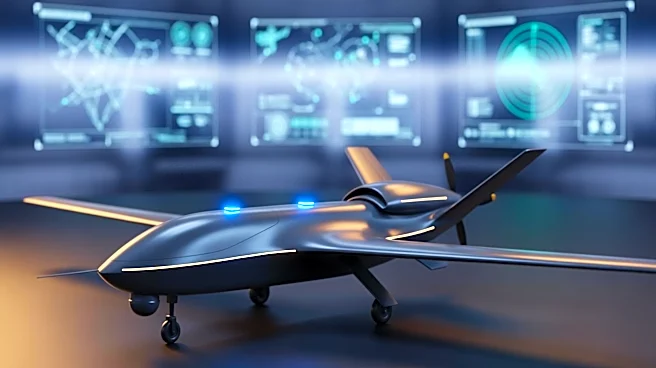
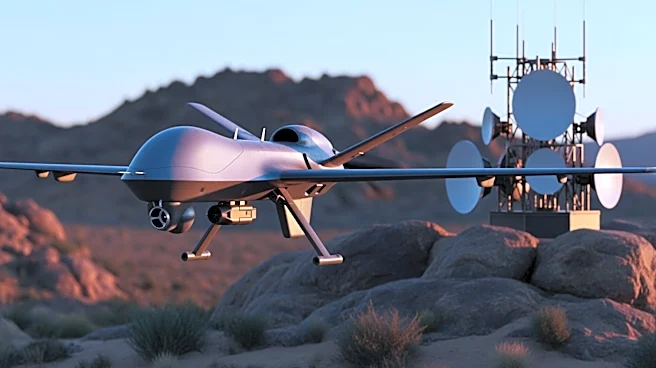
away from deploying low-cost UAVs, which were previously used in conflicts such as those against the Houthis in Yemen. Instead, Iran is now utilizing more sophisticated drones that are jet-powered and equipped with advanced sensors, electronic warfare capabilities, and signals intelligence. This development marks a departure from the era of inexpensive drones, which were often countered with high-value defenses. Cooper emphasized that the U.S. has effectively countered Iran's drone capabilities, noting that recent strikes by the U.S. and Israel have significantly degraded Iran's defense industrial base by 90%.
Why It's Important?
The shift in Iran's UAV strategy has significant implications for U.S. defense and foreign policy. The use of advanced drones by Iran poses a heightened threat, requiring the U.S. to adapt its defense strategies and technologies. This development could lead to increased military spending and innovation in counter-drone technologies. Additionally, the degradation of Iran's defense capabilities by U.S. and Israeli strikes may alter the balance of power in the region, potentially reducing Iran's ability to project power through UAVs in the near future. This shift also underscores the evolving nature of modern warfare, where technological advancements play a critical role in military strategy and international relations.
What's Next?
As Iran continues to develop and deploy more advanced UAVs, the U.S. and its allies may need to enhance their surveillance and counter-drone measures. This could involve increased investment in research and development of new technologies to detect and neutralize sophisticated drones. Furthermore, diplomatic efforts may be intensified to address the broader implications of Iran's military capabilities in the region. The U.S. may also seek to strengthen alliances with regional partners to ensure a coordinated response to potential threats posed by Iran's advanced UAVs.