







What's Happening?
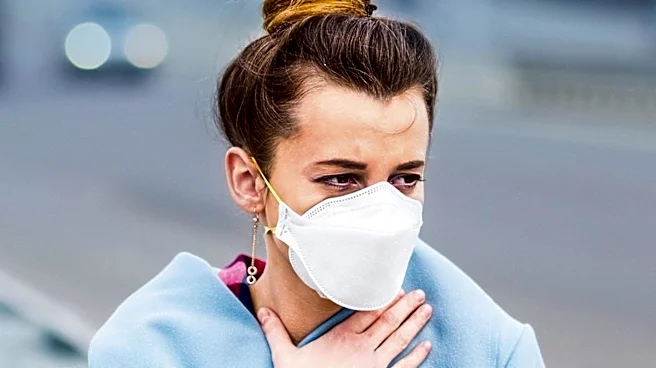
As smoke from Canadian wildfires spreads across the U.S., particularly affecting the Midwest and Northeast, experts recommend wearing N95 masks for protection. Kai Chen, an epidemiologist at Yale School of Public Health, emphasizes that N95 masks are
effective in filtering at least 95% of airborne particles, including the fine particulate matter (PM2.5) found in wildfire smoke. These particles can penetrate deep into the lungs and even enter the bloodstream, posing health risks. While surgical masks and other face coverings are less effective, N95 masks provide a tighter seal and better filtration.
Why It's Important?
The widespread smoke from Canadian wildfires has led to air quality alerts in several U.S. states, highlighting the need for effective protective measures. The use of N95 masks can mitigate health risks associated with exposure to fine particulate matter, which can exacerbate respiratory and cardiovascular conditions. This situation underscores the importance of public health preparedness and the need for accessible protective equipment during environmental crises. The guidance on mask usage also reflects lessons learned from the COVID-19 pandemic regarding respiratory protection.
What's Next?
As the wildfire season continues, public health officials may need to increase efforts to distribute N95 masks, especially in high-risk areas. There may also be a push for improved indoor air filtration systems in public and private spaces to reduce exposure to smoke. Long-term, this situation could prompt discussions on environmental policies and strategies to address the root causes of increased wildfire activity, such as climate change.