


What's Happening?
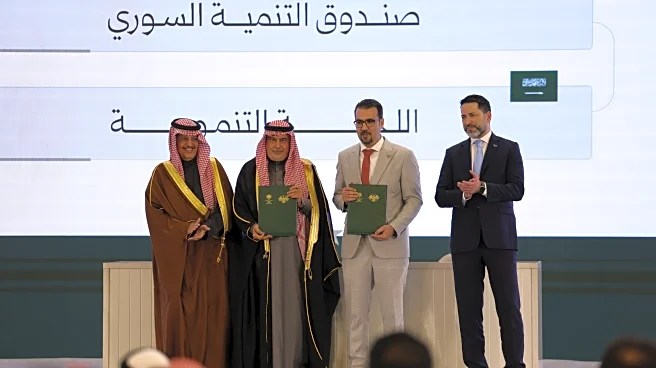
Saudi Arabia has unveiled a significant investment package in Syria, focusing on sectors such as energy, aviation, real estate, and telecommunications. This move positions Saudi Arabia as a key supporter of Syria's new leadership under President Ahmed
al-Sharaa, who assumed power in late 2024. The investment includes the establishment of the Elaf Fund, which will allocate 7.5 billion Saudi riyals ($2 billion) to develop two airports in Aleppo. Additionally, a new airline, 'flynas Syria,' will be launched as a joint venture between Saudi budget carrier flynas and the Syrian Civil Aviation Authority. Saudi Arabia's largest telecom operator, STC, plans to invest over three billion riyals ($799.96 million) to enhance Syria's telecommunications infrastructure. These investments follow the lifting of U.S. sanctions on Syria in December, which had previously hindered the country's economic recovery after a prolonged civil war.
Why It's Important?
The investment package marks a significant step in Syria's reconstruction efforts, potentially revitalizing its economy after years of conflict. By investing in critical infrastructure and telecommunications, Saudi Arabia is not only strengthening its economic ties with Syria but also playing a pivotal role in the country's recovery. This move could lead to increased regional stability and open new avenues for international cooperation. For Saudi Arabia, these investments may enhance its geopolitical influence in the region, aligning with its broader strategic interests. The involvement of Saudi private-sector investors indicates a potential boost in bilateral trade and economic collaboration, which could have long-term benefits for both nations.
What's Next?
The implementation of these investments will likely involve phased development, particularly in the aviation and telecommunications sectors. The new airline, 'flynas Syria,' is expected to commence operations in the fourth quarter of 2026, which could enhance connectivity and economic activity in the region. The success of these projects may encourage further foreign investment in Syria, contributing to its economic stabilization. However, the interim Syrian government faces challenges in converting memorandums of understanding into binding contracts, which will be crucial for the realization of these ambitious plans. Monitoring the progress of these investments will be essential to assess their impact on Syria's reconstruction and regional dynamics.