
What's Happening?
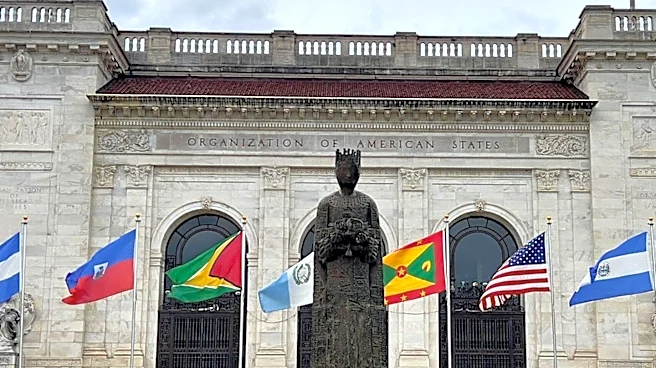
Aurelio Pastor Valdivieso, the new Permanent Representative of Peru to the Organization of American States (OAS), has officially presented his credentials to Secretary General Albert R. Ramdin at the OAS headquarters
in Washington, D.C. Ambassador Pastor emphasized Peru's dedication to fostering consensus, listening to diverse perspectives, and collaborating with all delegations. He articulated his belief that the OAS serves as a crucial platform for the Americas, upholding democracy, safeguarding human rights, and building security through legitimacy. Secretary General Ramdin acknowledged Peru's historical support for the OAS, citing its role in hosting General Assembly sessions and ministerial meetings, as well as its contributions to electoral observation, technical cooperation, and capacity building. Peru's commitment, according to Ramdin, extends to democratic governance, institutional strengthening, social development, and citizen security. Ambassador Pastor brings a background as a lawyer and politician, having previously served as Minister of Justice and a member of Congress.
Why It's Important?
This diplomatic development underscores the ongoing importance of multilateral institutions like the OAS in addressing regional challenges and promoting shared values across the Americas. Peru's reaffirmation of its commitment to the OAS signals continued support for democratic principles, human rights, and collective security, which are foundational to stability and prosperity in the Western Hemisphere. For the United States, a key member and host of the OAS headquarters, Peru's active participation is vital for advancing U.S. foreign policy objectives in Latin America, including strengthening democratic governance and regional cooperation on issues such as migration, economic development, and combating transnational crime. The experience of Ambassador Pastor, with his background in law and politics, suggests a focus on legal frameworks and political dialogue within the OAS, potentially influencing discussions on institutional reforms and the rule of law. This engagement helps to maintain a united front on critical regional issues, benefiting all member states by fostering a more predictable and cooperative environment.
What's Next?
Following the presentation of credentials, Ambassador Pastor is expected to actively engage in OAS deliberations, representing Peru's interests and contributing to the organization's agenda. His stated willingness to listen and build consensus suggests a constructive approach to regional diplomacy. Peru's continued support for the OAS, as highlighted by Secretary General Ramdin, indicates that the country will likely remain a reliable partner in initiatives related to electoral observation, technical assistance, and capacity building. This could translate into Peru taking on more prominent roles in specific OAS committees or working groups. The focus on defending democracy, protecting human rights, and building security will likely guide Peru's contributions to ongoing discussions and resolutions within the OAS, potentially influencing regional policies and collaborative efforts on these fronts. The new ambassador's tenure will be watched for how Peru further shapes the OAS's efforts in addressing contemporary challenges in the Americas.
Beyond the Headlines
The appointment of a new ambassador and the reaffirmation of commitment to the OAS reflect broader trends in regional diplomacy, where multilateral platforms remain crucial for addressing complex, interconnected challenges that transcend national borders. The emphasis on democracy, human rights, and security by both Peru and the OAS highlights the enduring relevance of these principles in a region often grappling with political instability and social inequalities. This diplomatic exchange also subtly reinforces the role of Washington, D.C., as a central hub for inter-American relations, given the OAS headquarters' location. The professional background of Ambassador Pastor, with his experience in justice and legislative roles, suggests a potential for Peru to advocate for stronger legal frameworks and institutional reforms within the OAS, aiming to enhance the effectiveness and legitimacy of the organization's interventions. This could lead to deeper discussions on the balance between national sovereignty and collective regional responsibilities in upholding democratic norms and human rights.