










What's Happening?
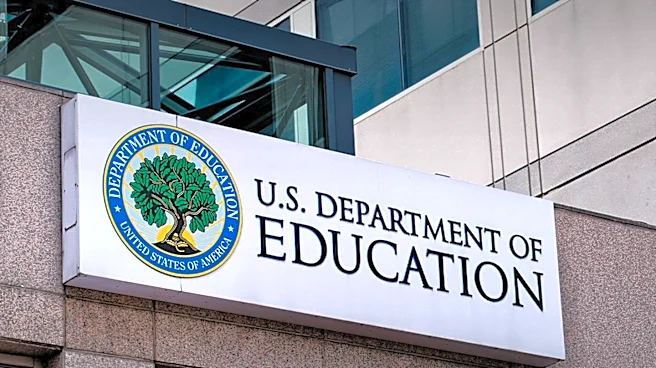
The U.S. Department of Education has released a new regulatory agenda under the Trump administration, focusing on several key political priorities. The agenda includes 19 proposed items, with six directly related to higher education and four concerning
civil rights enforcement. Key areas of focus include defining sex, eliminating diversity, equity, and inclusion (DEI) programs, and cracking down on foreign funding in education. The department plans to amend Title VI of the Civil Rights Act to address how it impacts DEI programs and to clarify that Title IX refers exclusively to biological sex. Additionally, the agenda aims to make it easier for colleges to merge, reduce textbook costs, and improve credit transfer policies. The department also intends to rescind a loan-repayment plan from the Biden administration and address federal student aid eligibility policies that affect faith-based and for-profit institutions.
Why It's Important?
This regulatory agenda reflects the Trump administration's broader push against DEI initiatives and its interpretation of recent Supreme Court rulings. The changes could significantly impact how colleges and universities operate, particularly in terms of admissions and program offerings. By redefining sex and targeting DEI programs, the administration aims to align educational policies with its conservative values. The focus on foreign funding transparency could affect institutions with international partnerships, potentially leading to a loss of federal funding if compliance is not met. These changes could reshape the landscape of higher education, affecting students, faculty, and institutional operations across the country.
What's Next?
The Department of Education plans to issue proposed changes for public comment, allowing stakeholders to provide feedback. The ambitious agenda may face challenges in implementation, as it is rare for an administration to complete all items on its regulatory list within a year. The department's focus on redefining sex and eliminating DEI programs may lead to legal challenges and public debate. Institutions will need to prepare for potential changes in federal aid eligibility and compliance with new regulations. The outcome of these regulatory efforts could influence future educational policies and the broader political landscape.