
What's Happening?
A researcher at the University of Mississippi, Mo Maniruzzaman, has been awarded a $7 million grant from the Health Resources and Services Administration to establish a 'self-driving' laboratory. This
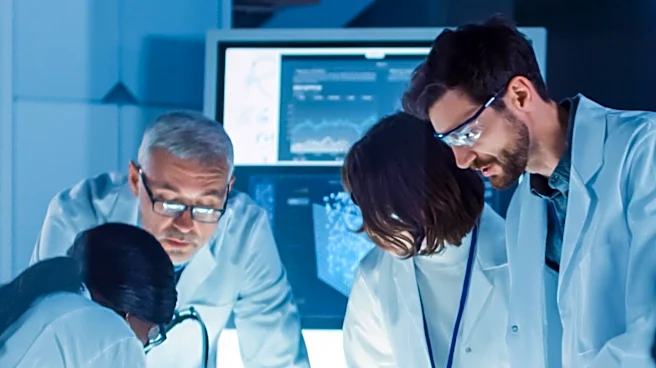
innovative lab will integrate artificial intelligence, robotics, and automated laboratory equipment to significantly expedite the process of developing, testing, and refining medications. The primary goal is to reduce the time it takes for new drugs to go from concept to market, which currently averages about 8.5 years. Maniruzzaman emphasizes the critical need for faster drug development, especially in states like Mississippi, which face a high burden of chronic diseases such as diabetes and cancer. The lab aims to minimize human error and operate continuously, thereby accelerating the discovery process for life-saving medications.
Why It's Important?
This initiative holds substantial importance for the U.S. healthcare industry and public health. By drastically shortening the drug development timeline, the 'self-driving' lab could lead to quicker access to new treatments for chronic conditions, potentially saving millions of lives annually. The integration of AI and robotics represents a significant leap forward in pharmaceutical research, promising increased efficiency, accuracy, and innovation. For states with high rates of chronic diseases, like Mississippi, this technology offers a beacon of hope for improved health outcomes and reduced healthcare burdens. Furthermore, this development could position the University of Mississippi as a leader in pharmaceutical engineering and AI-driven research, attracting further investment and talent to the region. The ability to rapidly develop and deploy new medications could also have broader economic impacts, fostering growth in the biotechnology and pharmaceutical sectors.
What's Next?
Over the next two years, Maniruzzaman plans to integrate existing technologies, such as 3D printers and advanced robotic bio-fabrication kits, into a cohesive system at Insight Park, the university's research and business incubator. The focus will be on creating a seamless, automated workflow that can operate 24/7, minimizing manual intervention and human error. While the lab aims to automate routine tasks, human researchers will remain crucial for high-level problem-solving and providing essential insights. The project will also involve continued research and development to refine the AI algorithms and robotic capabilities. The success of this 'self-driving' lab could serve as a model for other research institutions, potentially leading to a widespread adoption of similar technologies across the U.S. pharmaceutical research landscape, ultimately transforming how new drugs are discovered and brought to market.
Beyond the Headlines
The establishment of a 'self-driving' lab at the University of Mississippi signifies a broader trend towards automation and artificial intelligence in scientific research. This shift raises important questions about the future of human involvement in scientific discovery, the ethical implications of AI-driven research, and the potential for democratizing access to advanced medical technologies. While the immediate benefit is faster drug development, the long-term implications could include a redefinition of research roles, the creation of new specialized jobs in AI and robotics, and a more data-driven approach to healthcare. The ability of these labs to analyze millions of data points and predict potential drug candidates without human fatigue could lead to breakthroughs that were previously unimaginable. However, it also necessitates robust regulatory frameworks and ethical guidelines to ensure the responsible development and deployment of such powerful technologies, particularly in areas as sensitive as medicine.