



What's Happening?
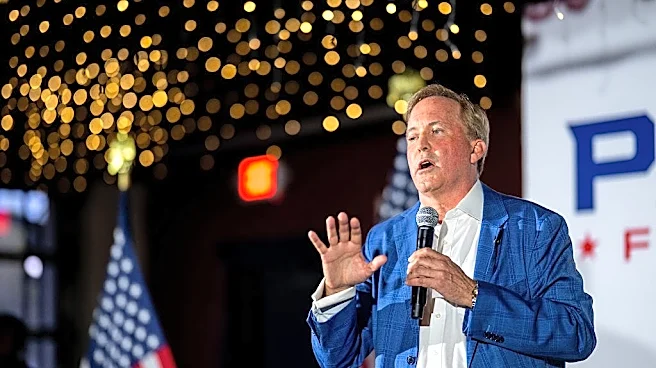
Texas Governor Greg Abbott has targeted Dallas-Fort Worth International Airport (DFW) by threatening to withhold federal funds due to the planned installation of Islamic foot-washing stations. Governor Abbott sent a letter to Secretary of Transportation
Sean Duffy, asserting that these ablution stations, intended for ritual washing before prayer, were illegal as they appeared to single out one religious group for special treatment. Following Abbott's request for an investigation from the Department of Transportation and the Federal Aviation Administration, DFW Airport canceled the project. Concurrently, Governor Abbott informed DFW Airport CEO Christopher McLaughlin that he was actively reviewing all grants to local governmental entities involved in such schemes for potential revocation. This action is part of a broader pattern where Governor Abbott has used the threat of funding cuts against North Texas entities. Previously, Dallas removed rainbow and Black Lives Matter crosswalks after a directive from Abbott, and the city was threatened with a loss of $32.1 million in state funding and $50 million in federal aid for public safety unless it repealed rules regarding local law enforcement's role in immigration efforts. Additionally, Abbott's intervention led to the cancellation of a private Muslim water park event in Grand Prairie by threatening to withhold $535,000 in grant funds.
Why It's Important?
Governor Abbott's actions against DFW Airport and other local entities highlight a significant tension between state-level executive power and local governance in Texas, particularly concerning issues of religious accommodation and social policy. The threat of revoking federal and state grants creates a chilling effect on local initiatives, potentially forcing municipalities and public institutions to align with state directives to avoid severe financial penalties. This approach impacts the autonomy of local governments to implement policies or facilities that cater to diverse community needs, such as religious accommodations for Muslim travelers. The broader implications extend to how public spaces are designed and managed to reflect the diversity of the U.S. population, and whether such accommodations are viewed as inclusive or as preferential treatment. For DFW Airport, a major international hub, the decision to cancel the foot-washing stations could affect its reputation among international travelers and its ability to provide culturally sensitive services. This situation also underscores the ongoing debate about the separation of church and state, and the extent to which religious practices can be accommodated in public facilities without violating constitutional principles or inciting political backlash.
What's Next?
The immediate consequence is the cancellation of the Islamic foot-washing stations at DFW Airport, which may lead to reactions from Muslim community groups and advocates for religious freedom. Local governmental entities in Texas will likely continue to face scrutiny from Governor Abbott's office regarding any initiatives that could be perceived as favoring specific groups or conflicting with state-level policy preferences. This could result in increased caution from local officials when planning projects that might become politically contentious. Further legal challenges or public discourse on the interpretation of religious accommodation in public spaces are possible. The Department of Transportation and the Federal Aviation Administration's involvement, though leading to the project's cancellation, sets a precedent for how similar issues might be handled in other U.S. airports or public facilities. The ongoing use of funding threats by Governor Abbott suggests that this strategy will continue to be a tool for influencing local policy across Texas, potentially leading to more confrontations between state and local authorities on various social and cultural issues.
Beyond the Headlines
This situation delves into the complex interplay of religious freedom, government funding, and political power dynamics in the U.S. The controversy over foot-washing stations, seemingly a minor architectural detail, reflects deeper societal debates about religious pluralism and the role of government in accommodating diverse faiths. By framing the stations as 'special treatment,' Governor Abbott taps into a broader narrative about perceived favoritism and the erosion of traditional norms, which can resonate with certain segments of the electorate. This incident also highlights the vulnerability of local projects to state-level political pressure, especially when federal funding is involved. The use of financial leverage by state executives can effectively bypass local democratic processes and impose a uniform cultural or ideological standard. Furthermore, it raises questions about the practical implications for international travel and trade, as major airports often strive to be welcoming to a global clientele. The long-term impact could be a chilling effect on efforts to create inclusive public spaces, potentially leading to a less diverse and less accommodating public infrastructure across the country.