

What's Happening?
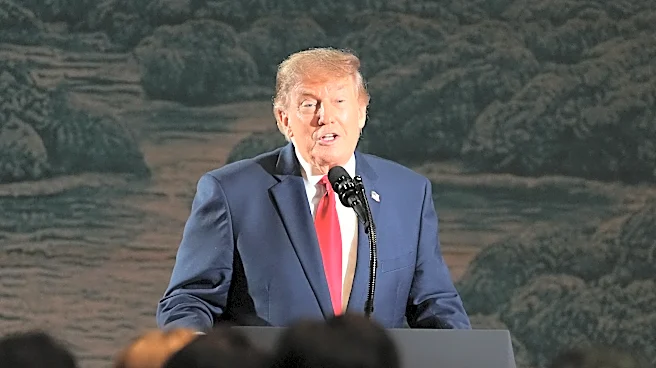
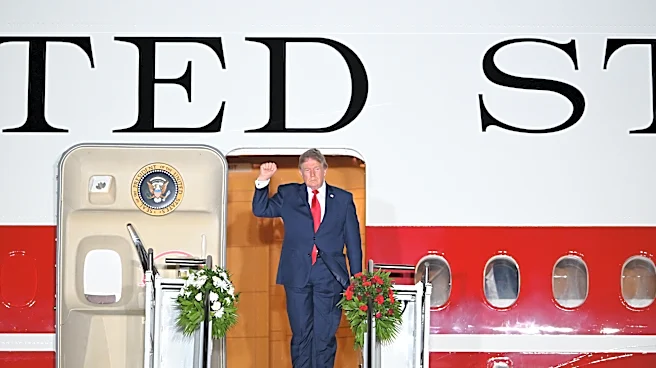
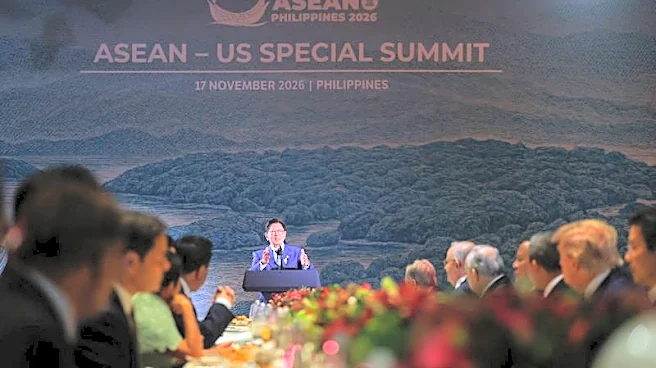
On November 17, 2026, in Manila, Philippines, President Donald J. Trump and Prime Minister Anutin Charnvirakul of Thailand confirmed the substantial conclusion of negotiations for an Agreement Between the United States of America and the Kingdom of Thailand on Reciprocal
Trade (ART). This agreement is designed to enhance the bilateral economic relationship between the two nations, building upon existing foundational agreements such as the 1966 Treaty of Amity and Economic Relations and the 2002 Trade and Investment Framework Agreement. The ART signifies a commitment to further economic cooperation and integration. Both countries will now proceed with their respective internal processes required to prepare the agreement for formal signature and subsequent entry into force.
Why It's Important?
This agreement holds significant importance for the economic ties between the United States and Thailand. By strengthening the bilateral economic relationship, the ART is expected to foster increased trade and investment opportunities for businesses in both countries. For the U.S., this could mean improved market access for American goods and services in Thailand, potentially boosting exports and supporting various U.S. industries. For Thailand, it could lead to greater economic stability and growth through enhanced trade with one of the world's largest economies. The agreement also underscores the U.S.'s continued engagement in the Indo-Pacific region, reinforcing its economic partnerships and strategic alliances in a key global area. The formalization of this agreement will provide a more predictable and favorable trade environment for businesses operating between the two nations.
What's Next?
Following this announcement, both the United States and Thailand will embark on their necessary internal procedures to finalize the ART. These processes typically involve legal reviews, domestic legislative approvals, and other administrative steps required before the agreement can be officially signed and implemented. Once these internal procedures are completed, the ART will be formally signed by representatives of both governments, after which it will enter into force according to its stipulated terms. The implementation of the agreement will then lead to the practical application of its provisions, which are expected to facilitate trade and investment flows between the two countries. The specific details regarding tariff reductions, market access, and other trade facilitation measures will become fully effective upon the agreement's entry into force.
Beyond the Headlines
The conclusion of the ART negotiations extends beyond immediate economic benefits, signaling a deeper commitment to long-term strategic partnership between the U.S. and Thailand. In an era of evolving global trade dynamics and geopolitical shifts, such bilateral agreements reinforce alliances and provide a framework for addressing future economic challenges and opportunities collaboratively. This agreement could also serve as a model for future trade discussions with other nations in the region, demonstrating the U.S.'s approach to fostering reciprocal trade relationships. Furthermore, the ART's emphasis on building upon existing agreements highlights a continuity in diplomatic and economic policy, providing a stable foundation for future engagements despite changes in political leadership. This stability is crucial for businesses seeking long-term investment and trade security.