
What's Happening?
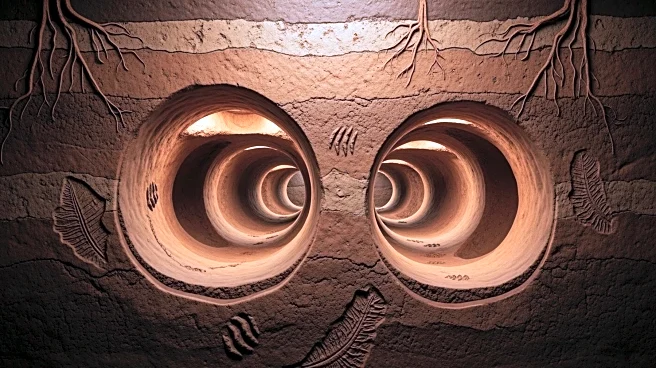
Recent discoveries in South America have unveiled massive underground tunnels, known as palaeoburrows, which were not created by humans but by prehistoric giant ground sloths. These tunnels, found primarily
in Brazil, Argentina, and Uruguay, stretch for tens of meters and are characterized by smooth walls and uniform curves, indicating deliberate excavation. The absence of human tool marks and the presence of fossilized footprints and claw marks suggest that these structures were made by large prehistoric animals. Geological analysis dates these tunnels back tens of thousands of years, aligning with the era of the giant ground sloths. The findings challenge previous assumptions about ancient ecosystems and the role of megafauna in environmental modification.
Why It's Important?
The discovery of these tunnels provides significant insights into the behavior and environmental impact of extinct megafauna, particularly the giant ground sloths. These animals, once thought to be passive inhabitants of their ecosystems, are now recognized as active environmental engineers. The tunnels likely served as shelters, offering stable temperatures and protection from predators, and may have been crucial during periods of climate change. This challenges the traditional view that humans were the primary agents of large-scale environmental change in prehistoric times. Understanding the ecological roles of these extinct species can inform current conservation efforts and highlight the potential consequences of losing large animals in modern ecosystems.
What's Next?
Further research is expected to focus on documenting more palaeoburrow sites to better understand the interactions between megafauna and their environments. Scientists aim to explore the ecological functions of these tunnels and their impact on ancient ecosystems. This research could lead to a reevaluation of the role of large animals in shaping their habitats and provide new perspectives on the importance of preserving biodiversity today. Additionally, the study of trace fossils, such as footprints and claw marks, will continue to be a valuable tool in reconstructing the behaviors and environmental influences of extinct species.
Beyond the Headlines
The findings underscore the importance of trace fossils in understanding prehistoric life, offering a behavioral record that complements skeletal remains. The study of these tunnels also highlights the potential for large animals to significantly alter their environments, a concept that could reshape conservation strategies. By recognizing the ecological roles of extinct species, researchers can draw parallels to modern conservation challenges, emphasizing the need to preserve large animals and their habitats to maintain ecological balance.