






What's Happening?
A new meta-analysis published in The Lancet Public Health challenges the long-held belief that all physical activity equally benefits brain health. Led by David Raichlen of USC Dornsife College, the study analyzed data from 74 cohort and case-control
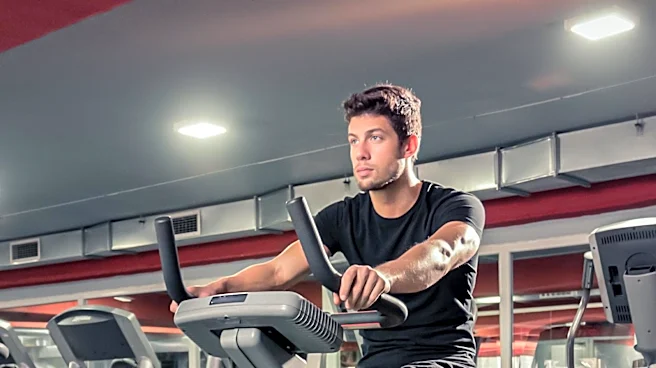
studies, involving over 4.2 million individuals aged 45 to 93 across 30 countries, with a median follow-up of 10 years. The findings indicate that while leisure-time physical activity, such as walking, swimming, running, cycling, or sports, was associated with a 24% lower risk of dementia, occupational physical activity showed a 20% higher risk. Active commuting to work also presented a modest increase in risk, though this finding is based on fewer studies. Lucrecia Moreno, Professor of Pharmacology and Director of the DeCo Chair for the Study of Cognitive Impairment at CEU Cardenal Herrera University, notes that this aligns with existing evidence on the 'physical activity paradox' in cardiovascular research, where physically demanding jobs do not offer the same health benefits as voluntary exercise and may even increase disease risk.
Why It's Important?
This research is significant as it refines our understanding of the relationship between physical activity and brain health, particularly concerning dementia. It suggests that the context of physical activity—whether for work or leisure—plays a crucial role in its impact. For U.S. society, where a substantial portion of the workforce engages in physically demanding jobs, these findings could influence public health recommendations and workplace policies. The study implies that the adverse effects of occupational physical activity might not stem from the movement itself, but from associated factors like psychosocial stress, lack of control over tasks, exposure to occupational hazards and pollution, and reduced opportunities for recreational exercise due to fatigue or time constraints. This highlights a need for a more nuanced approach to promoting physical activity, considering the broader environmental and social conditions of work. Understanding these distinctions can help in developing targeted interventions to protect brain health, especially for those in physically strenuous occupations.
What's Next?
The study's authors and experts like Lucrecia Moreno emphasize the need for further research, particularly prospective randomized studies, to establish causality. They also call for a more refined classification of occupational activity, moving beyond simple physical versus intellectual categories, to account for cognitive reserve and life purpose. Future steps may involve exploring how to mitigate the negative impacts of occupational physical activity, such as implementing strategies to control workplace stress and improve working conditions. Public health campaigns might need to differentiate between types of physical activity, promoting leisure exercise while also addressing the unique challenges faced by individuals in physically demanding jobs. The findings could also spur discussions among policymakers and employers about creating healthier work environments that support both physical and cognitive well-being, potentially through improved access to recreational facilities and sufficient leisure time.
Beyond the Headlines
The 'physical activity paradox' revealed in this study extends beyond the immediate health implications, touching upon broader societal and ethical considerations. It underscores the potential health disparities between different socioeconomic groups, as physically demanding jobs are often held by individuals with fewer resources and less control over their work environments. The study implicitly calls for a re-evaluation of how 'work' is valued in terms of health outcomes, suggesting that the benefits of physical labor might be offset by its associated stressors and lack of autonomy. This could lead to a deeper conversation about the social determinants of health and the need for holistic approaches that consider not just individual behaviors but also the structural conditions that shape health. Furthermore, it highlights the importance of cognitive reserve, suggesting that intellectual engagement and purposeful living, alongside physical activity, are crucial for brain health, prompting a re-examination of educational and lifelong learning opportunities.