







What's Happening?
Kyoto, Japan, is highlighted as a premier destination for travelers seeking a blend of rich history and cultural immersion. The city is characterized by its numerous centuries-old temples, serene gardens, and traditional neighborhoods. Key attractions
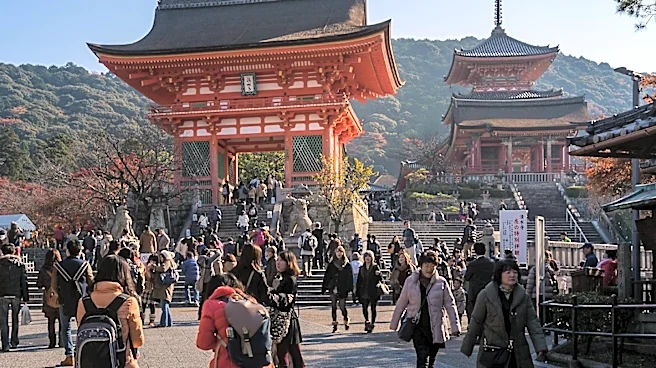
include the iconic Fushimi Inari Taisha, famous for its vermilion torii gates, and Kiyomizu-dera, known for its large wooden terrace offering panoramic views. Kinkaku-ji, or the Golden Pavilion, with its gold-leaf-covered upper floors reflecting in the surrounding pond, is another prominent site. Visitors can also explore the bamboo groves of Arashiyama and the historic streets of Gion and Higashiyama, which preserve traditional Japanese charm. The city also offers diverse culinary experiences, from kaiseki dining to matcha sweets and the bustling Nishiki Market. Kyoto's appeal lies in its ability to offer a distinct experience compared to Japan's modern cities, focusing on cultural landmarks and natural beauty.
Why It's Important?
Kyoto's enduring appeal as a cultural hub is significant for the global tourism industry, particularly for those interested in authentic historical and cultural experiences. The preservation of its traditional architecture, temples, and gardens provides a unique window into Japan's past, attracting a steady stream of international visitors. This influx supports local economies through tourism-related businesses, including hospitality, dining, and traditional crafts. The city's focus on cultural authenticity also helps maintain traditional arts and practices, ensuring their continuity for future generations. For travelers, Kyoto offers an opportunity for deep cultural engagement, contrasting with the more modern urban landscapes found elsewhere, thereby enriching their understanding of Japanese heritage and contributing to a more diverse global tourism landscape.
What's Next?
Kyoto is expected to continue attracting a significant number of tourists, especially during peak seasons like spring (cherry blossoms) and autumn (fall foliage). Travelers planning visits during these times are advised to book accommodations well in advance due to high demand. The city's transportation network, including trains, subways, and buses, will remain crucial for navigating its spread-out attractions. Efforts to manage tourist flow and preserve the local environment, particularly in residential areas like Gion, will likely continue, with visitors encouraged to respect local customs and regulations. The city's accommodation tax, which varies by price point, will also remain a factor for visitors to consider in their budgeting. Kyoto will likely continue to evolve its tourism offerings while striving to maintain its unique cultural identity.
Beyond the Headlines
Beyond its surface-level attractions, Kyoto embodies a deeper cultural significance as the former imperial capital of Japan. Its emphasis on traditional arts, such as kaiseki cuisine and tea ceremonies, reflects a profound connection to historical practices and aesthetic values. The city's numerous temples and shrines are not merely tourist sites but active centers of spiritual life, offering insights into Buddhist and Shinto traditions. The careful preservation of districts like Gion and Higashiyama highlights a societal commitment to maintaining cultural heritage in the face of modernization. This dedication to tradition provides a unique context for understanding Japanese identity and its evolution, offering visitors a chance to engage with a living history that extends beyond mere sightseeing into a deeper appreciation of cultural continuity and spiritual practice.