




What's Happening?
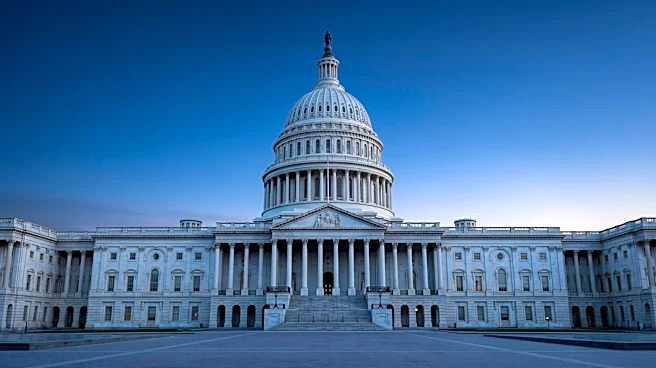
Congresswoman Haley Stevens is set to introduce the Paul Whelan Hostage Compensation and Reintegration Act, a bill designed to provide one-time financial compensation to U.S. citizens who have been wrongfully detained abroad. The legislation is named
after Paul Whelan, who spent over five years imprisoned in Russia and faced significant personal and financial challenges upon his return to Michigan. The bill aims to address the loss of housing, employment, and health insurance often experienced by individuals after such detentions. Funding for this compensation would come from unused money within the U.S. Department of Justice’s forfeited assets fund. The initiative was developed through collaboration between Stevens' office, Paul Whelan, the Foley Foundation, Hostage U.S., representatives from the State Department, and the Office of the Special Presidential Envoy for Hostage Affairs. The bill seeks to ensure that Americans returning from wrongful detention receive the necessary resources to rebuild their lives.
Why It's Important?
This legislation is important because it addresses a critical gap in support for U.S. citizens who endure wrongful detention overseas. The experiences of individuals like Paul Whelan and Trevor Reed highlight the severe financial and personal instability that can follow such ordeals, including lost income, housing, and health insurance. By providing financial compensation, the bill aims to mitigate these long-term consequences, allowing detainees to regain their footing and reintegrate into society without the added burden of financial hardship. This initiative could set a precedent for how the U.S. government supports its citizens in complex international situations, potentially encouraging other nations to reconsider wrongful detentions due to the financial implications for the U.S. government. It also underscores a commitment to the welfare of Americans caught in geopolitical disputes, offering a tangible form of assistance beyond diplomatic efforts for release.
What's Next?
The Paul Whelan Hostage Compensation and Reintegration Act is slated for introduction in the House of Representatives. Congresswoman Stevens' office is focused on building bipartisan support to expedite the legislative process. While a specific date for a House vote has not yet been set, the goal is to move the bill through as quickly as possible. If passed, the bill would establish a mechanism for compensation, funded by the Department of Justice's forfeited assets. However, individuals who voluntarily traveled to countries with a Level 4 'Do Not Travel' advisory or a 'D' designation for wrongful detention risk would generally not be eligible, with exceptions for official business or journalism. The bill's proponents, including Paul Whelan and Trevor Reed, believe it could also serve as a deterrent to foreign governments considering wrongful detentions, as it formalizes a U.S. response to the aftermath of such actions.
Beyond the Headlines
Beyond the immediate financial relief, this bill touches upon deeper ethical and societal implications regarding the responsibility of a nation to its citizens abroad. It acknowledges that the trauma of wrongful detention extends far beyond physical captivity, impacting an individual's entire life and financial stability. The legislation also raises questions about the balance between individual freedom to travel and governmental protection, particularly with the proposed exclusions for those traveling to high-risk areas. This could lead to broader discussions about travel advisories and their role in defining governmental obligations. Furthermore, by drawing funds from forfeited assets, the bill subtly links the consequences of criminal activity to the support of victims of international injustice, creating a unique funding model. This could inspire similar approaches to address other forms of hardship faced by U.S. citizens due to international incidents.