





What's Happening?
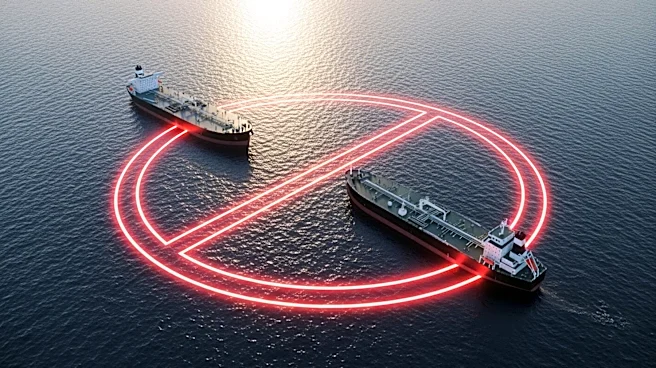
Oil tankers are avoiding the Strait of Hormuz in anticipation of a U.S. blockade set to begin following failed peace talks between the U.S. and Iran. President Trump announced the blockade, which aims to control maritime traffic to and from Iranian ports.
The U.S. Central Command has stated that the blockade will be enforced impartially, affecting vessels of all nations. Despite the impending blockade, some tankers have managed to pass through the strait, but the situation remains tense as Iran's Revolutionary Guards have warned against military vessels approaching the area.
Why It's Important?
The Strait of Hormuz is a vital chokepoint for global oil transport, and its blockade could significantly disrupt international energy supplies. The move raises geopolitical tensions and could lead to increased oil prices, affecting economies worldwide. The blockade also highlights the fragility of global supply chains and the potential for geopolitical conflicts to impact global trade. The situation is a critical test for international diplomacy and the ability of global markets to adapt to sudden disruptions.
What's Next?
The enforcement of the blockade and its impact on global shipping will be closely monitored. The international community may seek diplomatic solutions to ease tensions and ensure the free flow of goods. Businesses and governments will need to assess the risks and develop strategies to mitigate the impact of the blockade on their operations. The situation could lead to increased calls for alternative energy sources and routes to reduce dependency on the Strait of Hormuz.