








What's Happening?
Syrian President Ahmad al-Sharaa and Iraqi Prime Minister Ali al-Zaidi held discussions in Damascus, focusing on economic and security cooperation. Key understandings were reached regarding preparations for a joint economic conference, the potential rehabilitation
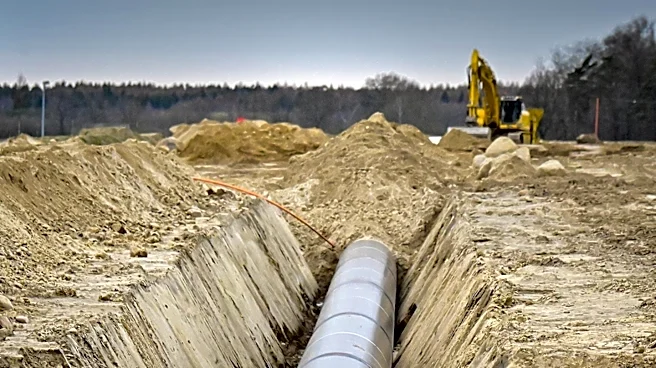
of the Kirkuk–Baniyas oil pipeline, and the development of new trade corridors. The talks also included arrangements for an upcoming visit by a high-level Iraqi security delegation to address border tensions and strengthen security coordination. This visit marks the first by an Iraqi prime minister to Damascus since the fall of Bashar al-Assad’s regime in December 2024. The agenda reflects a shared desire to expand economic and security cooperation, with ministers of foreign affairs, justice, finance, and energy from both countries attending the discussions. The leaders also reviewed commercial connectivity projects involving Saudi Arabia, Türkiye, and Iraq’s Al-Faw port.
Why It's Important?
The potential revival of the Kirkuk–Baniyas pipeline is significant for Iraq, offering an additional oil export route through Syrian ports on the Mediterranean, thereby diversifying its commercial outlets and reducing reliance on limited options, especially amid regional tensions. For Syria, this project could help restore its role in regional transit transport and revitalize its service, trade, and border-crossing sectors. Expanded security cooperation, including intelligence sharing and counter-terrorism efforts, is crucial for both nations to combat persistent threats from groups like ISIS and the Kurdistan Workers’ Party (PKK), which exploit security gaps. Strengthening border security and curbing smuggling are essential for protecting transit trade and investment, fostering regional stability, and insulating both countries from broader regional conflicts. This rapprochement could lead to significant economic benefits and enhanced regional security.
What's Next?
The immediate next steps include the forthcoming visit of a high-level Iraqi security delegation to Syria, which will focus on shared security files, border tensions, and direct coordination between relevant institutions. Both governments are also jointly preparing for a Syrian-Iraqi economic conference to bring together investors and companies to explore opportunities in energy, transport, agriculture, and trade. Technical and regulatory studies, along with coordinated procedures between ministries and border authorities, will be required to implement projects like the Kirkuk–Baniyas pipeline and new trade corridors. The success of these initiatives will depend on the practical steps taken by both sides in the coming period, including resolving border issues and advancing economic projects. Continued dialogue and cooperation are expected to solidify the renewed relationship between Damascus and Baghdad.
Beyond the Headlines
This rapprochement between Syria and Iraq signifies a potential shift in regional dynamics, moving towards greater economic integration and security collaboration in a post-conflict environment. The discussions highlight a pragmatic approach by both nations to leverage their geographical positions for mutual benefit, linking the Arabian Gulf to the Mediterranean. Beyond immediate economic gains, this cooperation could foster long-term regional stability by creating shared interests and reducing vulnerabilities to external pressures. The emphasis on coordinating political positions to shield both countries from regional conflicts suggests a desire for greater autonomy and resilience in a volatile geopolitical landscape. This development could also influence broader regional alliances and trade routes, potentially reshaping economic corridors and security partnerships in the Middle East.