








What's Happening?
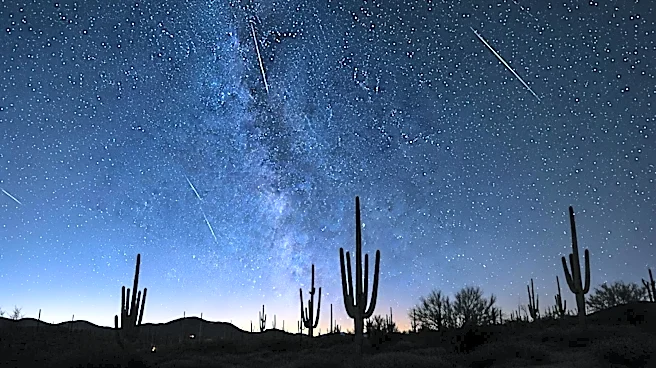
The Lyrid meteor shower, a prominent astronomical event, is currently visible across the United States, with Arizona offering some of the best viewing locations due to its numerous International Dark Sky Places. The shower, which occurs when Earth passes
through debris left by comets, is expected to peak on the night of April 21-22, 2026. During this peak, observers can expect to see approximately 18 meteors per hour, with potential surges exceeding 100 meteors per hour. Arizona's top viewing spots include Oracle State Park, Saguaro National Park, and Flagstaff, the world's first International Dark Sky City. The Lyrids are best viewed from midnight to dawn, with the radiant point near the constellation Lyra in the northeastern sky.
Why It's Important?
The Lyrid meteor shower provides a unique opportunity for both amateur and professional astronomers to observe a natural celestial event. Arizona's designation as a prime location for viewing due to its dark sky parks highlights the state's commitment to preserving natural night skies, which is significant for both ecological and tourism reasons. The event draws attention to the importance of reducing light pollution, which can have adverse effects on wildlife and human health. Additionally, such events can boost local economies by attracting tourists and astronomy enthusiasts, thereby supporting local businesses and promoting environmental awareness.
What's Next?
As the Lyrid meteor shower continues until April 30, 2026, Arizona's dark sky parks are expected to see increased visitor numbers. This influx may prompt local authorities to enhance facilities and services to accommodate tourists. Additionally, the event may encourage further initiatives to protect dark skies, potentially leading to more areas being designated as International Dark Sky Places. The success of this event could also inspire educational programs and community events focused on astronomy and environmental conservation.