







What's Happening?
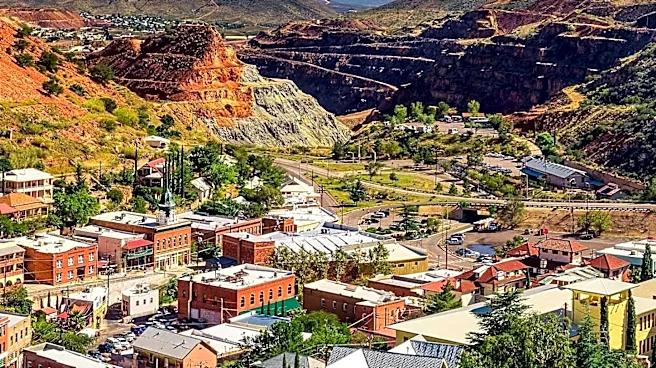
A federal court has temporarily halted the sale of over 2,000 acres of public land near the Anaconda Copper Mine site in Nevada to the Atlantic Richfield Company (ARC). The decision comes as a lawsuit challenging the sale is underway, with environmental
groups arguing that the sale could lead to further environmental harm. The Bureau of Land Management (BLM) had approved the sale, claiming it would facilitate a more effective clean-up of the contaminated site. However, the court found that the sale could cause irreparable harm by cutting off public access to the land and potentially violating federal land disposal requirements.
Why It's Important?
The court's decision to block the land sale underscores the ongoing environmental and legal challenges associated with the Anaconda Copper Mine site. The site has a long history of pollution, impacting local communities and ecosystems. The ruling highlights the tension between economic development and environmental protection, as stakeholders debate the best approach to clean-up efforts. The case also raises questions about the role of federal agencies in managing public lands and ensuring compliance with environmental regulations. The outcome of the lawsuit could set a precedent for future land sales and environmental oversight in the region.
What's Next?
As the lawsuit proceeds, stakeholders will be closely monitoring the legal arguments and potential implications for the Anaconda site. The court's decision may influence future land management policies and environmental regulations. If the sale is ultimately blocked, ARC and other involved parties may need to explore alternative strategies for site remediation. The case also presents an opportunity for increased public engagement and advocacy around environmental justice and sustainable land use. The resolution of the lawsuit will be critical in determining the future of the Anaconda site and its impact on local communities.