



What's Happening?
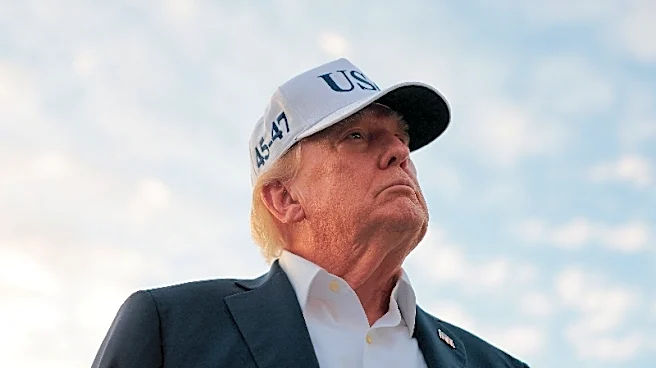
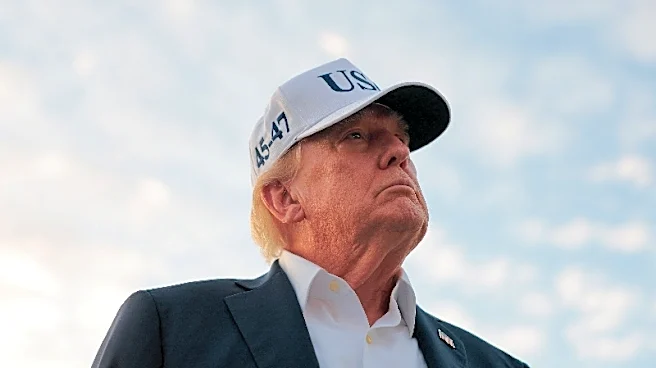
President Trump has publicly called for the removal of José de Rivera’s abstract sculpture, 'Infinity,' from the National Museum of American History. He described the 1967 sculpture as not representing America, inspiring no one, and honoring no American heroes.
Instead, President Trump proposed replacing it with a 30-foot 'Colossus' of George Washington. Additionally, he requested an immediate five-year exhibition dedicated to the Founding Father and the creation of a 'Center for American Heroes.' President Trump also suggested adding an 11-foot Washington statue, previously displayed at the 'Freedom 250' festivities, to the museum's Flag Hall by Thursday. These demands follow the recent announcement of Smithsonian Secretary Lonnie Bunch's retirement and come after a July executive order from the president that accused the museum of partisan bias. The museum already houses a classical sculpture of George Washington by Horatio Greenough, and Rivera's 'Infinity' is noted for framing the Washington Monument when viewed from the east.
Why It's Important?
President Trump's directive to replace an abstract sculpture with a classical depiction of George Washington at a national museum highlights a broader effort to reshape the narrative of American history presented by national institutions. This move reflects a preference for traditional, representational art over abstract forms, which President Trump has previously criticized. The emphasis on specific historical figures and a 'Center for American Heroes' suggests an attempt to promote a particular interpretation of American identity and values through public art and museum exhibits. This could influence how future generations perceive American history and art, potentially sidelining diverse artistic expressions and historical interpretations. The controversy also underscores the ongoing tension between political administrations and cultural institutions regarding artistic freedom, historical representation, and the role of national museums in shaping public understanding. Such interventions can impact the autonomy of cultural institutions and their ability to curate collections based on artistic merit and historical scholarship.
What's Next?
The immediate future will likely involve discussions and potential resistance from the National Museum of American History and the broader Smithsonian institution regarding President Trump's demands. Museum exhibitions of the proposed scale typically require years of planning, making the request for an immediate five-year exhibition on George Washington and the installation of a new statue by Thursday logistically challenging. The Smithsonian's leadership, including the incoming Secretary, will need to navigate these political pressures while upholding the institution's curatorial independence and mission. This situation could lead to further public debate about the role of government in cultural institutions and the interpretation of American history. It may also prompt artists, art historians, and cultural advocates to voice their opinions on the value of abstract art and the importance of diverse artistic representation in national collections.
Beyond the Headlines
This incident extends beyond a simple art preference, touching upon deeper philosophical and political debates about art, history, and national identity. President Trump's consistent critique of abstract art and his push for classical designs in federal buildings and public spaces suggest a broader cultural agenda. This approach aligns with historical instances where political regimes have sought to control artistic expression to promote specific ideologies, as seen during the Red Scare when abstract art was labeled as un-American. The debate over 'Infinity' highlights the inherent tension between art that invites individual interpretation and art that explicitly conveys a prescribed message. The struggle over what constitutes 'American' art and history in national museums reflects a larger societal conflict over who defines national identity and how that identity is presented to the public. This could set a precedent for future political interference in cultural institutions, potentially impacting artistic freedom and the diversity of narratives presented in public spaces.