

What's Happening?
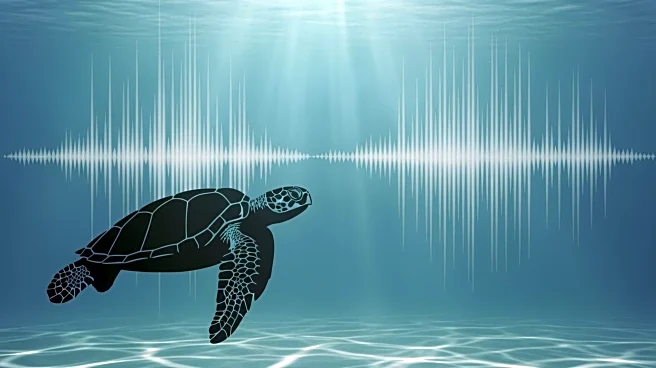
A study published in the Journal of the Acoustical Society of America has revealed that Kemp's ridley sea turtles, one of the most endangered sea turtle species, are significantly affected by human-made noise in their habitats. These turtles inhabit the East
and Gulf Coasts of North America, areas that are heavily trafficked by ships. The research, conducted by a team from Duke University Marine Laboratory, the National Oceanic and Atmospheric Administration, and North Carolina State University, aimed to understand the turtles' hearing capabilities and their vulnerability to noise pollution. The study found that these turtles are most sensitive to low-frequency sounds, which are commonly produced by ships and industrial activities. This sensitivity overlaps with the natural sounds the turtles use for navigation, potentially disrupting their ability to orient themselves in the ocean.
Why It's Important?
The findings of this study are crucial for the conservation of Kemp's ridley sea turtles, as they highlight a previously underexplored threat to their survival. Noise pollution from human activities could interfere with the turtles' natural behaviors, such as navigation and communication, which are essential for their survival. This research underscores the need for targeted conservation efforts and policies to mitigate the impact of noise pollution on marine life. By understanding the specific frequencies that affect these turtles, conservationists can develop strategies to protect them from harmful noise levels, ensuring their habitats remain conducive to their survival.
What's Next?
The research team plans to extend their studies to observe how Kemp's ridley sea turtles respond to noise in real-world ocean conditions. This will involve correlating laboratory findings with the physical effects of noise on turtles in their natural environments. The goal is to refine understanding of how human-caused noise interacts with sea turtle sensory systems and to support evidence-based management approaches. These efforts aim to balance human activities with the need to protect marine life, potentially leading to new regulations or guidelines to minimize noise pollution in critical turtle habitats.