

What's Happening?
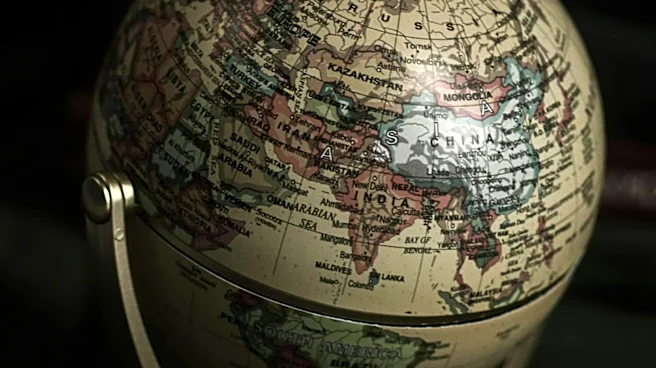
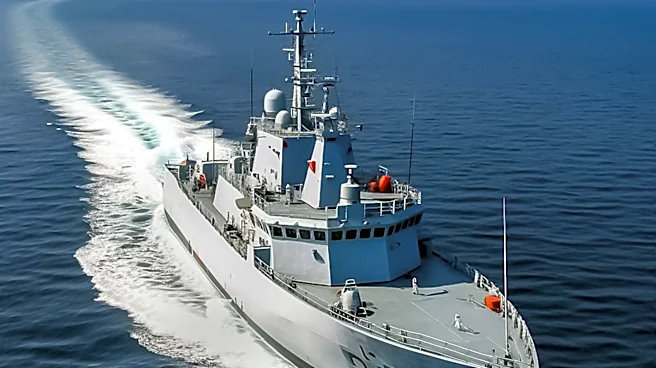
President Donald Trump has posted on Truth Social, declaring the Strait of Hormuz as 'NEW US TERRITORY' and sharing a map depicting this claim. This follows his previous statement last week that the strait would become U.S. territory "pretty soon." This action
is part of a pattern of what has been described as President Trump's "cartographic aggression," where he has previously suggested Canada as the 51st state, depicted Venezuela with American colors, expressed interest in acquiring Greenland from Denmark, and formally ordered the federal government to rename the Gulf of Mexico as the "Gulf of America." These actions are seen by critics as treating sovereign borders and international geography as personal property, while supporters view them as political trolling aimed at provoking opponents and engaging his base.
Why It's Important?
President Trump's declaration regarding the Strait of Hormuz, a critical international waterway, carries significant geopolitical implications. The Strait of Hormuz is a vital chokepoint for global oil shipments, and any assertion of U.S. sovereignty over it would be a major international incident, directly challenging the sovereignty of Iran and other nations bordering the strait. Such statements, even if perceived as political theater, can create diplomatic tensions, influence international relations, and potentially impact global markets due to the strait's strategic importance. While supporters may view it as a form of political communication, foreign governments, diplomats, and military planners must consider the potential for such declarations to escalate into policy or conflict, highlighting the fine line between rhetoric and real-world consequences in international affairs.
What's Next?
The immediate next steps are likely to involve reactions from international bodies and affected nations, particularly Iran, which has previously dismissed such claims. Diplomatic channels may be engaged to clarify the U.S. stance, though President Trump's past actions suggest a continuation of this provocative communication style. The international community will be closely watching to see if these declarations translate into any formal policy changes or military actions, which could have severe repercussions for regional stability and global trade. Domestically, these statements will likely fuel ongoing political debates about the nature of presidential communication and its impact on foreign policy, especially in the context of an upcoming election cycle.
Beyond the Headlines
President Trump's use of social media to make such declarations blurs the traditional boundaries of presidential communication and international diplomacy. This approach transforms serious geopolitical issues into a form of internet meme culture, where attention and provocation become central. The deeper implication is the potential erosion of established norms in international relations, where official statements typically follow careful deliberation and diplomatic protocols. When a President uses platforms like Truth Social to assert territorial claims, it raises questions about the credibility of U.S. foreign policy and the stability of international law. This phenomenon challenges how the world interprets and responds to statements from a major global power, potentially leading to increased uncertainty and miscalculation in an already complex geopolitical landscape. It also highlights the power of digital platforms to shape global perceptions and influence international discourse in unprecedented ways.