






What's Happening?
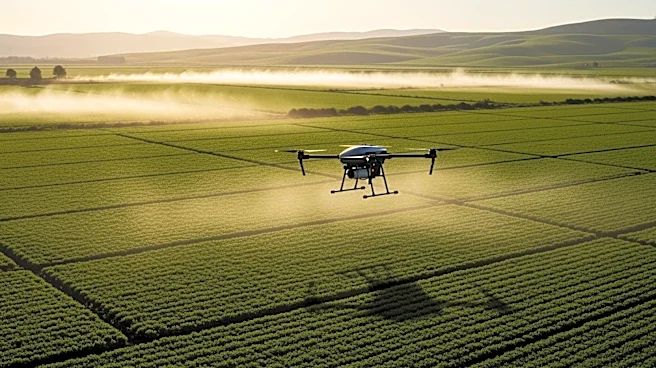
Drone technology is transforming agricultural practices across the United States, according to research from Washington State University. Drones are being utilized for remote sensing, allowing farmers to monitor entire fields and individual plants from above.
This capability aids in early detection of issues such as soil moisture imbalance, pest infestations, diseases, and crop stress, enabling timely interventions to prevent crop loss. Additionally, drones are replacing traditional, costly, and risky farming methods, such as using helicopters for rainwater removal in cherry orchards. They offer safer and more affordable alternatives for tasks like frost protection and crop spraying, targeting only affected areas to reduce chemical use and environmental impact. Supported by a USDA-funded multistate research project, universities are testing drone platforms and developing training materials to facilitate adoption by farmers.
Why It's Important?
The integration of drone technology in agriculture is significant for several reasons. It enhances farm efficiency by providing precise data for informed decision-making, which can lead to increased crop yields and reduced operational costs. By minimizing the use of chemicals and replacing manned aircraft, drones contribute to environmental sustainability and safety in farming practices. The technology also supports the development of resilient agricultural systems, crucial for addressing challenges such as climate change and resource scarcity. As drones become more prevalent, they are expected to play a vital role in improving the profitability and sustainability of U.S. agriculture, benefiting farmers and the broader economy.
What's Next?
As research and development continue, drones are likely to become integral to various agricultural operations, including livestock management and water resource monitoring. The ongoing USDA-supported research aims to enhance drone reliability and ease of use, encouraging widespread adoption. Future advancements may include more sophisticated sensors and software, further optimizing farm management practices. Stakeholders such as agricultural researchers, policymakers, and farmers will likely collaborate to expand the applications of drone technology, ensuring it meets the evolving needs of the industry.