



What's Happening?
European Union foreign ministers convened in Brussels to address Ukraine’s impending winter energy emergency, as Russia intensifies its attacks on critical infrastructure. The meeting, chaired by EU foreign policy chief Kaja Kallas, follows mounting evidence
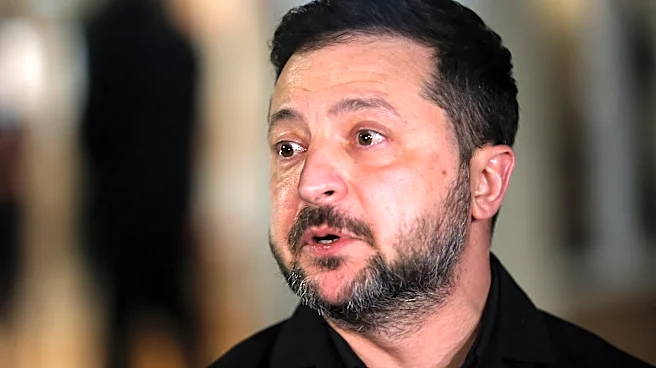
of Russia's campaign to disrupt essential civilian services. Recent attacks, including one on an energy facility in the Odesa region, left approximately 41,000 households without electricity, with further outages reported in Zaporizhzhia and Dnipropetrovsk regions. Ukrainian President Volodymyr Zelenskyy stated that Russia launched over 2,300 drones, 1,590 guided aerial bombs, and 15 missiles in the preceding week. Ukraine’s national electricity transmission operator, Ukrenergo, has announced consumption restrictions for households and industrial customers. The International Energy Agency warned on November 4 that Ukraine is likely to face significant electricity shortages this winter, despite efforts to install additional distributed gas-fired generating capacity and investments in wind power and battery storage.
Why It's Important?
The deliberate targeting of Ukraine's energy infrastructure by Russia poses a severe humanitarian threat, particularly as winter approaches. The destruction of regional distribution networks, transformers, and substations can lead to widespread power outages, impacting urban heating systems, water supplies, hospitals, telecommunications, and railway services. During sustained sub-zero temperatures, such disruptions could force residents from their homes, creating a new wave of population displacement and placing additional strain on Ukrainian municipalities and neighboring European countries. For European governments, strengthening Ukraine's energy resilience is not only a humanitarian imperative but also a strategic component of maintaining Ukraine's negotiating position in ongoing diplomatic efforts to end the war. The effectiveness of European assistance, which has exceeded €4 billion since 2022, hinges on the ability to deliver and install replacement equipment faster than Russia can destroy existing infrastructure.
What's Next?
The discussions among EU foreign ministers will focus on how to bolster Ukraine's resilience ahead of winter and counter Russia's hybrid operations. The challenge lies in the race between reconstruction and destruction, as specialized equipment requires lengthy procurement and installation procedures. Ukraine's energy needs are intrinsically linked to its military air defense capabilities, as sophisticated drones threaten to undermine improvements in distributed energy installations. The urgency of these discussions will be measured by whether additional European commitments can translate into operational equipment, stronger air defenses, and functioning infrastructure before winter conditions worsen. The broader implications for European security, including Moscow's negotiating demands concerning the wider European security architecture, underscore the critical nature of these efforts.
Beyond the Headlines
The situation in Ukraine highlights the evolving nature of modern warfare, where critical civilian infrastructure becomes a primary target to exert pressure and undermine national resilience. This strategy has significant ethical and legal implications under international humanitarian law. Furthermore, the crisis underscores the interconnectedness of energy security and national sovereignty, demonstrating how energy can be weaponized in geopolitical conflicts. The EU's response reflects a growing recognition that supporting Ukraine's energy stability is integral to its own security and stability. The long-term implications include the need for more robust and decentralized energy systems that are less vulnerable to centralized attacks, as well as enhanced international cooperation in cybersecurity and infrastructure protection.