







What's Happening?
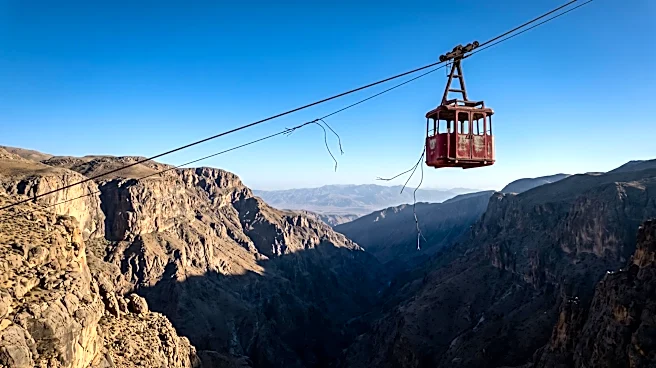
A new documentary titled 'Hanging by a Wire' is set to retell the harrowing story of a cable car rescue in rural Pakistan. The incident involved eight individuals, including six children, who became trapped 900 feet above the ground after two cables snapped
midair. The film, directed by Mohammed Ali Naqvi, chronicles the audacious efforts undertaken to rescue those stranded in the cable car. The event captured international attention due to the extreme height and the vulnerability of the trapped individuals, particularly the children. The documentary aims to provide a detailed account of the rescue operation, highlighting the challenges faced by the rescuers and the sheer terror experienced by those awaiting salvation. Host Scott Tong interviewed director Mohammed Ali Naqvi about the making of the film and the dramatic events it portrays.
Why It's Important?
This documentary serves as a powerful reminder of the inherent risks associated with certain modes of transportation, especially in remote or mountainous regions where infrastructure may be less developed. While the incident occurred in Pakistan, it resonates globally by underscoring the critical importance of safety regulations, maintenance, and emergency response capabilities for such systems. For the U.S., where cable cars and aerial trams are used in tourist destinations and ski resorts, the film can prompt discussions about the continuous need for rigorous safety inspections and robust emergency protocols to prevent similar catastrophic failures. It also highlights the human element of such crises, showcasing the bravery of rescuers and the resilience of survivors. The documentary's focus on the children involved amplifies the emotional impact, drawing attention to the vulnerability of young lives in unexpected disasters and the collective human effort to protect them.
What's Next?
The release of 'Hanging by a Wire' is expected to bring renewed attention to the cable car incident and the broader issues of infrastructure safety in Pakistan and potentially other regions. The documentary may spark further conversations about the need for international cooperation in developing and implementing safety standards for aerial transport systems. For the director, Mohammed Ali Naqvi, the film offers an opportunity to share a compelling human story of survival and heroism with a wider audience. It could also inspire other filmmakers to explore similar real-life events that highlight human courage and the challenges of disaster response. The narrative may also encourage local authorities in Pakistan to review and reinforce safety measures for cable cars, particularly those serving remote communities, to prevent future occurrences of such terrifying incidents.
Beyond the Headlines
Beyond the immediate drama of the rescue, 'Hanging by a Wire' delves into the psychological impact of extreme peril and the collective human response to crisis. The documentary likely explores the intricate dynamics of fear, hope, and community solidarity that emerged during the ordeal. It can serve as a case study in disaster management, illustrating both the successes and potential shortcomings of emergency services in challenging environments. The film also implicitly touches upon the socio-economic factors that lead communities in remote areas to rely on potentially hazardous transportation methods. By focusing on the children, the documentary highlights the disproportionate vulnerability of young populations in such events, prompting reflection on child safety in public infrastructure. Ultimately, the story is a testament to the indomitable human spirit and the profound instinct to protect life, even in the most dire circumstances, offering a universal message of resilience and compassion.