
What's Happening?
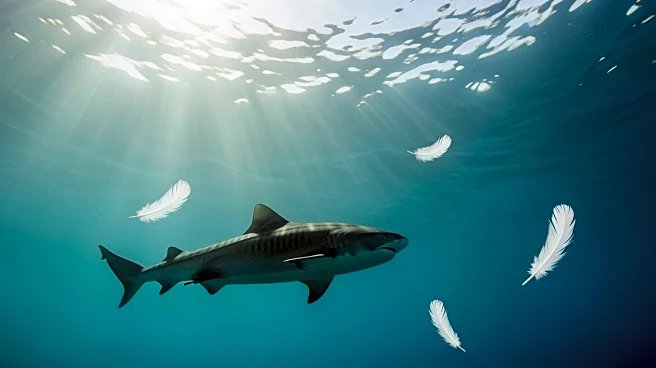
Joe Spring, a science editor and photographer, has captured remarkable images of tiger sharks preying on albatross fledglings at Tern Island, a remote coral island northwest of Hawaii. Spring, who was
initially on the island to tag sea turtles, observed the fledgling albatrosses as they attempted to leave the island, only to become targets for the numerous tiger sharks that gather in the area. These sharks are drawn to the island during the summer months, hoping to catch the young birds as they crash land into the water. Spring's observations and photographs have contributed to a study by the University of Hawaii at Mānoa's Hawaii Institute of Marine Biology, which examines how the presence of tiger sharks affects other predators in the area.
Why It's Important?
The study highlights the significant impact that seasonal food sources, such as fledgling seabirds, can have on predator behavior and habitat use. The presence of tiger sharks at Tern Island forces smaller predators, like gray reef sharks, to alter their habitat to avoid predation. This dynamic illustrates the complex interactions within predator communities and how they adapt to changes in food availability. Understanding these interactions is crucial for marine biology and conservation efforts, as it provides insights into the ecological balance and the potential consequences of environmental changes on predator-prey relationships.
What's Next?
The findings from this study could inform future conservation strategies aimed at protecting both the seabird populations and the marine predators that rely on them. Researchers may continue to monitor the interactions between tiger sharks and other predators to better understand the long-term ecological impacts. Additionally, the study could lead to further investigations into how other seasonal food sources influence predator behavior in different marine environments.
Beyond the Headlines
The research underscores the importance of considering the broader ecological implications of predator-prey interactions. It raises questions about how human activities, such as fishing and habitat destruction, might disrupt these natural processes. The study also highlights the need for comprehensive marine management plans that take into account the interconnectedness of species and their habitats.