
What's Happening?
Iran and Israel have agreed to halt military operations following a series of missile exchanges that threatened to disrupt a delicate ceasefire. The escalation involved at least 30 ballistic missiles launched
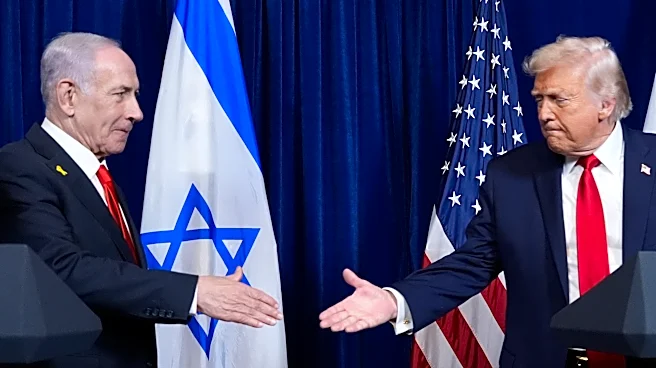
by Iran and numerous Israeli airstrikes. President Trump intervened, urging both nations to cease hostilities. Iran's military claimed its actions were a response to Israeli attacks on Lebanon, while Israel's Prime Minister Benjamin Netanyahu warned of further retaliation if provoked. The conflict has already resulted in significant casualties and displacement, affecting regional stability and global economies.
Why It's Important?
The cessation of hostilities between Iran and Israel is crucial for maintaining regional stability in the Middle East. The conflict has the potential to escalate into a broader war, impacting global oil markets and international relations. President Trump's involvement underscores the U.S.'s role in mediating Middle Eastern conflicts. The situation also highlights the fragile nature of ceasefires in the region, where underlying tensions remain unresolved. The outcome of these negotiations could influence future U.S. foreign policy and its diplomatic relations with both Iran and Israel.
What's Next?
While the immediate threat of escalation has been averted, the underlying tensions between Iran and Israel persist. Future negotiations will likely focus on addressing these issues to prevent further conflict. The U.S. may continue to play a mediating role, with President Trump indicating that a final peace deal is in progress. However, the situation remains volatile, with both nations prepared to resume hostilities if provoked. The international community will be closely monitoring developments, as any renewed conflict could have significant geopolitical and economic repercussions.