






What's Happening?
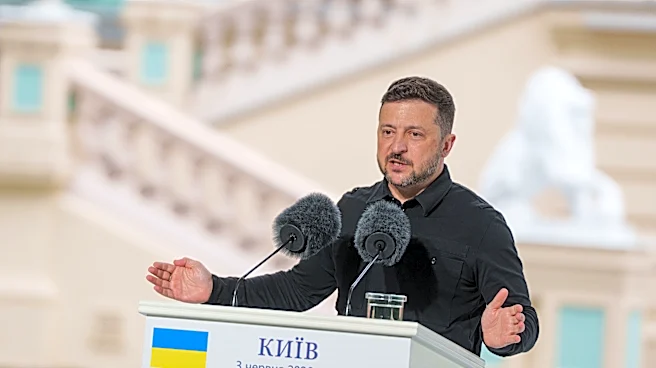
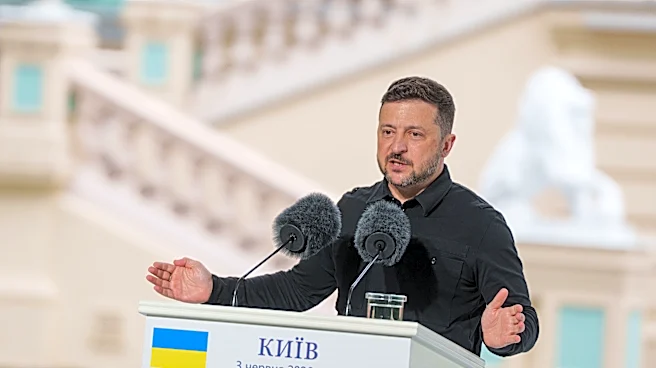
A Russian drone has struck a building used for storing spent nuclear fuel near the Chornobyl nuclear power plant in Ukraine. The attack, described by Ukrainian President Volodymyr Zelenskyy as 'extremely vile,' targeted a critical infrastructure facility.
Although the building was empty of containers at the time, the strike has raised concerns about nuclear safety. The International Atomic Energy Agency (IAEA) reported that radiation levels remained within normal limits, and its experts are preparing to visit the site. The attack is part of a broader pattern of Russian military actions that have put Ukrainian nuclear facilities at risk.
Why It's Important?
The attack on a nuclear facility near Chornobyl, the site of the world's worst nuclear disaster, highlights the ongoing risks of military conflict in regions with sensitive nuclear infrastructure. Such actions pose significant threats to nuclear safety and environmental security, with potential consequences for public health and international stability. The incident underscores the need for stringent safeguards and international oversight to prevent nuclear accidents in conflict zones. It also reflects the broader geopolitical tensions between Russia and Ukraine, with implications for regional security and international diplomatic efforts to resolve the conflict.
What's Next?
The IAEA's planned visit to the site will be crucial in assessing the damage and ensuring that safety protocols are maintained. The international community may increase pressure on Russia to adhere to international norms regarding the protection of nuclear facilities. Diplomatic efforts to de-escalate the conflict and address the risks to nuclear safety will likely continue. The situation may also prompt discussions on enhancing global frameworks for the protection of nuclear sites in conflict zones, potentially leading to new agreements or initiatives aimed at preventing similar incidents in the future.