








What's Happening?
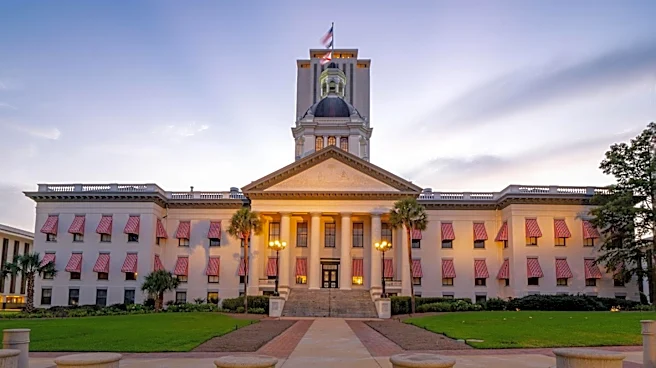
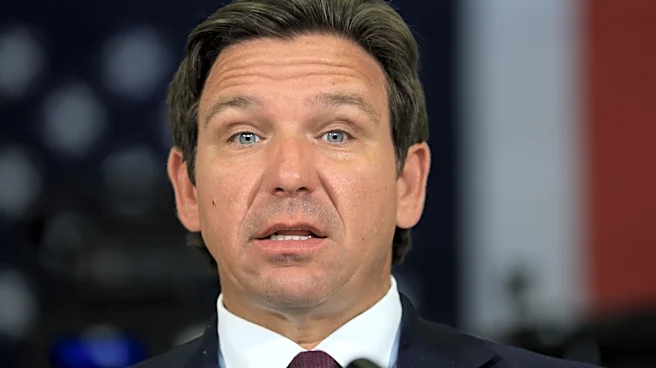
Florida has enacted a new law, HB 1217, which restricts local governments from pursuing net-zero emissions policies. Signed by Governor Ron DeSantis, the law takes effect on July 1, 2026, and aims to limit efforts by Florida communities to offset greenhouse
gas emissions. The legislation argues that net-zero policies, carbon taxes, and emission trading programs are detrimental to the state's energy security and economic interests. This move comes despite several Florida cities and counties, including Miami and Orlando, having set goals for net-zero emissions by 2050. The law also prevents local governments from participating in carbon-trading programs or using public funds to support organizations with net-zero policies.
Why It's Important?
The enactment of HB 1217 is significant as it represents a shift in Florida's approach to climate change and energy policy. By restricting net-zero initiatives, the law could hinder efforts to combat climate change in a state that is particularly vulnerable to its effects, such as rising sea levels and intensified hurricanes. Critics argue that the law is a concession to fossil fuel interests and could lead to higher energy costs for residents. The legislation may also discourage local governments from pursuing innovative climate solutions, potentially impacting Florida's long-term environmental and economic resilience.
What's Next?
The implementation of HB 1217 may lead to legal challenges or pushback from local governments and environmental groups. Cities and counties that have already adopted net-zero goals might seek ways to continue their efforts within the constraints of the new law. Additionally, the law could influence future legislative actions in Florida and other states, as policymakers balance economic interests with environmental responsibilities. The response from the public and stakeholders will be crucial in shaping the state's climate policy moving forward.
Beyond the Headlines
The broader implications of Florida's anti-net zero law highlight the ongoing tension between economic development and environmental sustainability. The law could set a precedent for other states considering similar measures, potentially affecting national climate policy. It also raises ethical questions about the responsibility of state governments to address climate change and protect vulnerable communities. The decision underscores the influence of political and economic pressures on environmental legislation, with potential long-term consequences for public health and safety.