





What's Happening?
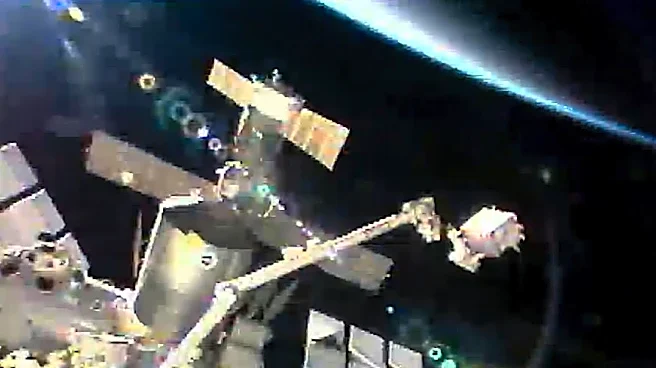
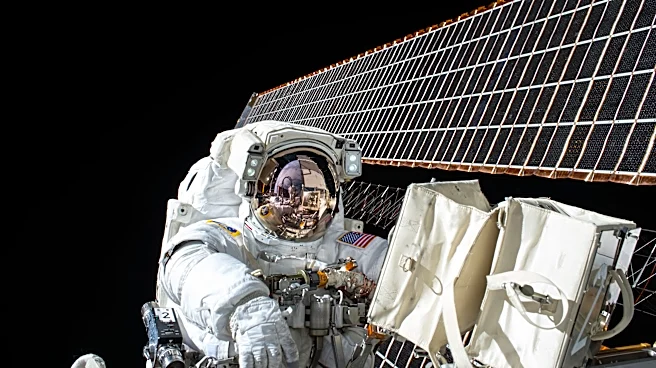
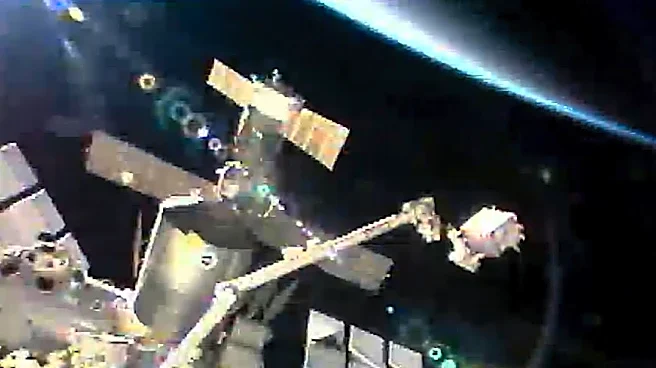
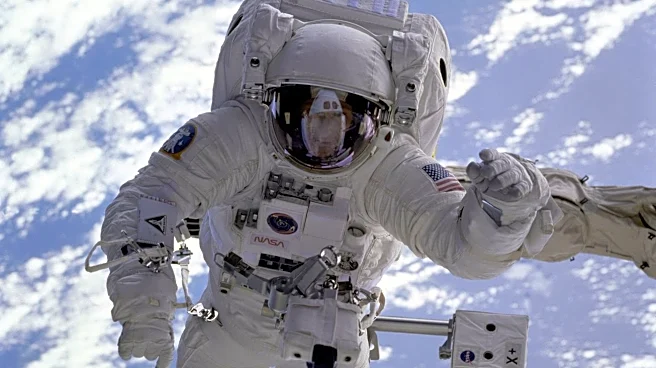
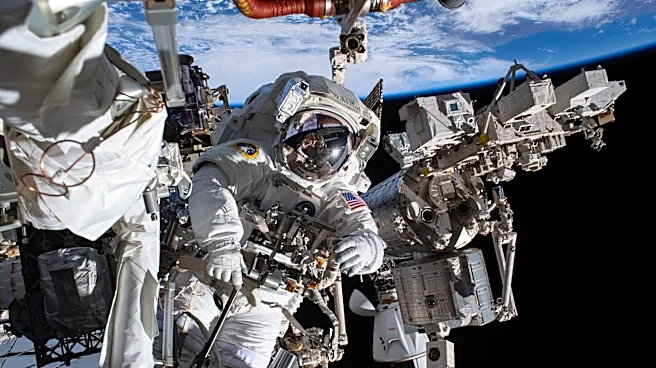
NASA astronauts Jessica Meir and Chris Williams conducted a spacewalk to replace a malfunctioning wrist joint on the International Space Station's (ISS) robotic arm, Canadarm2. The operation was necessary after flight controllers at the Johnson Space Center
identified that one of the arm's joints was drawing more current than expected and not functioning properly. The astronauts replaced the faulty joint with a spare stored on an external platform. This spacewalk marked the third of the year and the 280th overall for the ISS. The Canadarm2 is crucial for station operations, including capturing cargo ships and assisting in maintenance tasks. The successful replacement ensures the arm remains operational, supporting the ISS until its planned retirement in 2030.
Why It's Important?
The successful repair of the Canadarm2 is vital for the continued operation of the ISS, as the robotic arm plays a key role in docking cargo ships and facilitating maintenance. This operation underscores the importance of having replaceable components in space technology, allowing for repairs and maintenance without returning to Earth. The ability to maintain and repair critical systems like the Canadarm2 ensures the ISS can continue its mission of scientific research and international collaboration in space. The repair also highlights the collaboration between NASA and the Canadian Space Agency, which provided the robotic arm, showcasing international cooperation in space exploration.
What's Next?
Following the successful repair, the failed joint will be returned to Earth for refurbishment and potentially relaunched for future use. NASA plans to maintain the Canadarm2 throughout the ISS's operational life, which is expected to continue until 2030. The agency will continue to monitor the arm's performance and conduct necessary maintenance to ensure its functionality. This ongoing maintenance is crucial for the ISS's operations, as the arm is integral to various tasks, including docking and maintenance. The continued functionality of the Canadarm2 will support the ISS's role in scientific research and international cooperation in space.