







What's Happening?
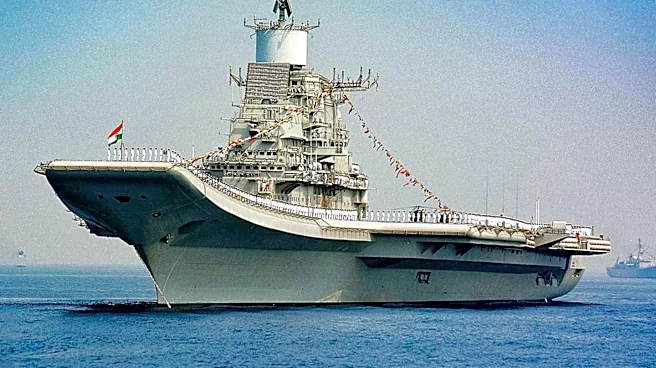
Indian Naval Ships Sahyadri and Kulish are participating in the second ASEAN-India Maritime Exercise (AIME) in the Philippines. This exercise, co-hosted by the Indian Navy and the Philippine Navy, aims to enhance mutual understanding, cooperation, and interoperability
at sea among ASEAN member states and India. The event includes subject matter expert exchanges on Humanitarian Assistance and Disaster Relief (HADR), maritime domain awareness, logistics, and women, peace, and security. These discussions will be followed by sea drills off the coast of Zambales province, featuring boarding operations, helicopter cross-deck landings, and medical evacuations. India's Ambassador to the Philippines, Harsh Kumar Jain, attended the opening ceremony, emphasizing the historical maritime connections between India and Southeast Asia and reaffirming India's support for ASEAN centrality and the ASEAN Outlook on the Indo-Pacific. The exercise builds upon the inaugural AIME held in Singapore in 2023.
Why It's Important?
This maritime exercise is important as it strengthens regional partnerships and maritime security in the Indo-Pacific, a region critical for global trade and geopolitical stability. The participation of Indian naval assets underscores India's commitment to its Act East Policy and its vision of MAHASAGAR, which promotes security and growth for all in the region. Enhanced interoperability and cooperation among the navies of ASEAN and India can lead to more effective responses to maritime challenges, including disaster relief and maintaining freedom of navigation. For the U.S., a stable and secure Indo-Pacific, supported by strong alliances and partnerships, is vital for its strategic interests and the global economy. The exercise also serves as a diplomatic tool, fostering trust and demonstrating a united front against potential threats to maritime order, indirectly supporting U.S. efforts to maintain a free and open Indo-Pacific.
What's Next?
The exercise will continue with sea drills off the coast of Zambales province, focusing on practical applications of the exchanged expertise. These drills will include boarding operations, helicopter cross-deck landings, and medical evacuations, designed to test and improve the participating navies' operational capabilities and coordination. Following the conclusion of the exercise, the insights gained from the expert exchanges and sea drills are expected to inform future maritime cooperation initiatives between India and ASEAN member states. The continued engagement is likely to lead to further joint exercises and collaborative efforts in areas such as maritime domain awareness and humanitarian assistance, reinforcing the theme of 'Anchored in Trust, United at Sea.' The success of this exercise could also pave the way for more complex and frequent multilateral naval engagements in the region.
Beyond the Headlines
Beyond the immediate tactical benefits of improved interoperability, this exercise carries significant strategic implications. It signals a growing alignment between India and ASEAN nations in addressing shared maritime security concerns, particularly in the context of evolving geopolitical dynamics in the Indo-Pacific. The emphasis on Humanitarian Assistance and Disaster Relief (HADR) highlights a broader commitment to regional stability and collective response capabilities, which are crucial given the region's vulnerability to natural disasters. Furthermore, the exercise subtly reinforces the principle of a rules-based international order, which is a cornerstone of U.S. foreign policy in the region. By strengthening these partnerships, the exercise contributes to a more resilient regional security architecture, potentially mitigating the influence of revisionist powers and promoting a balance of power that benefits all stakeholders committed to peace and prosperity.